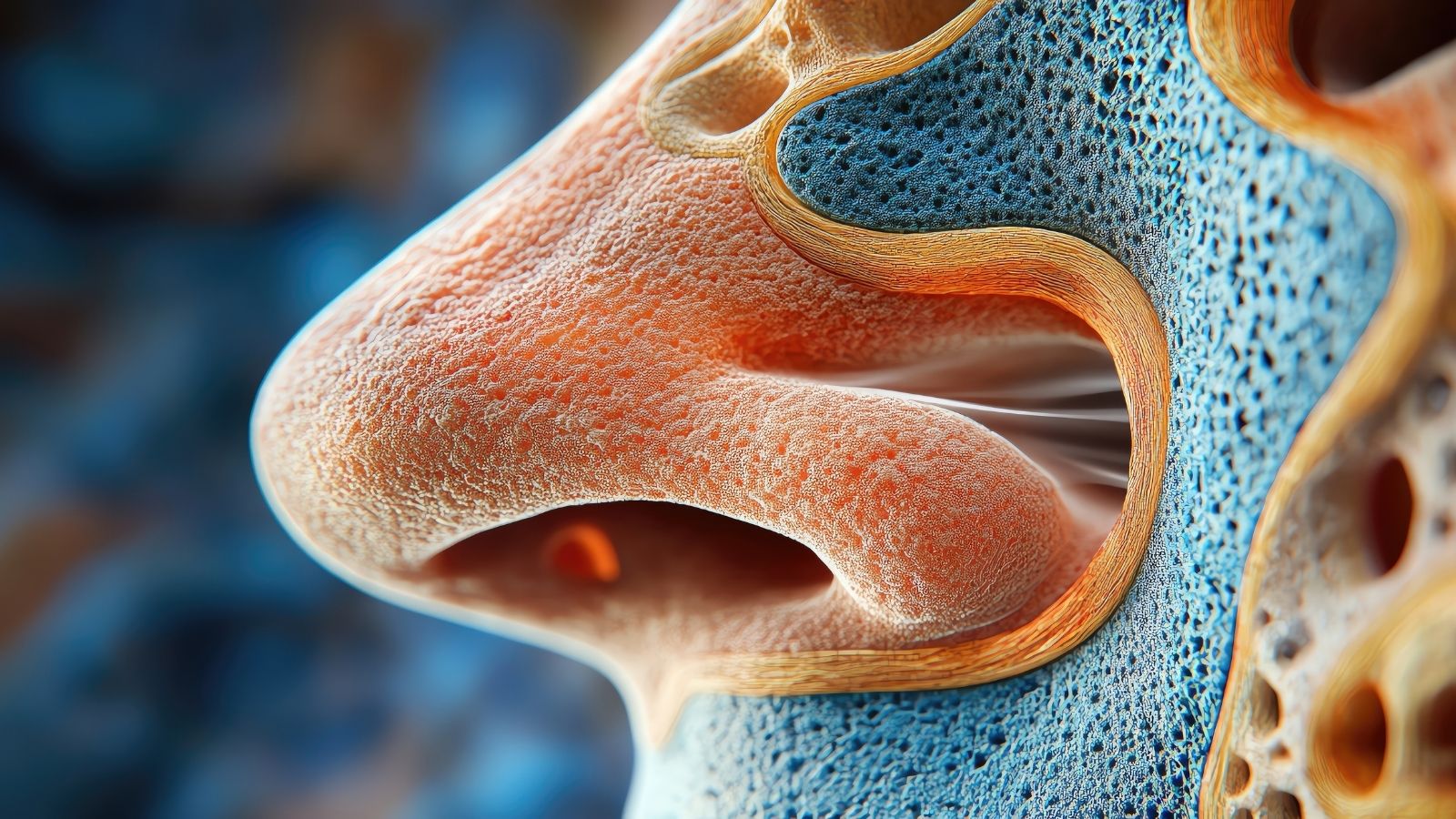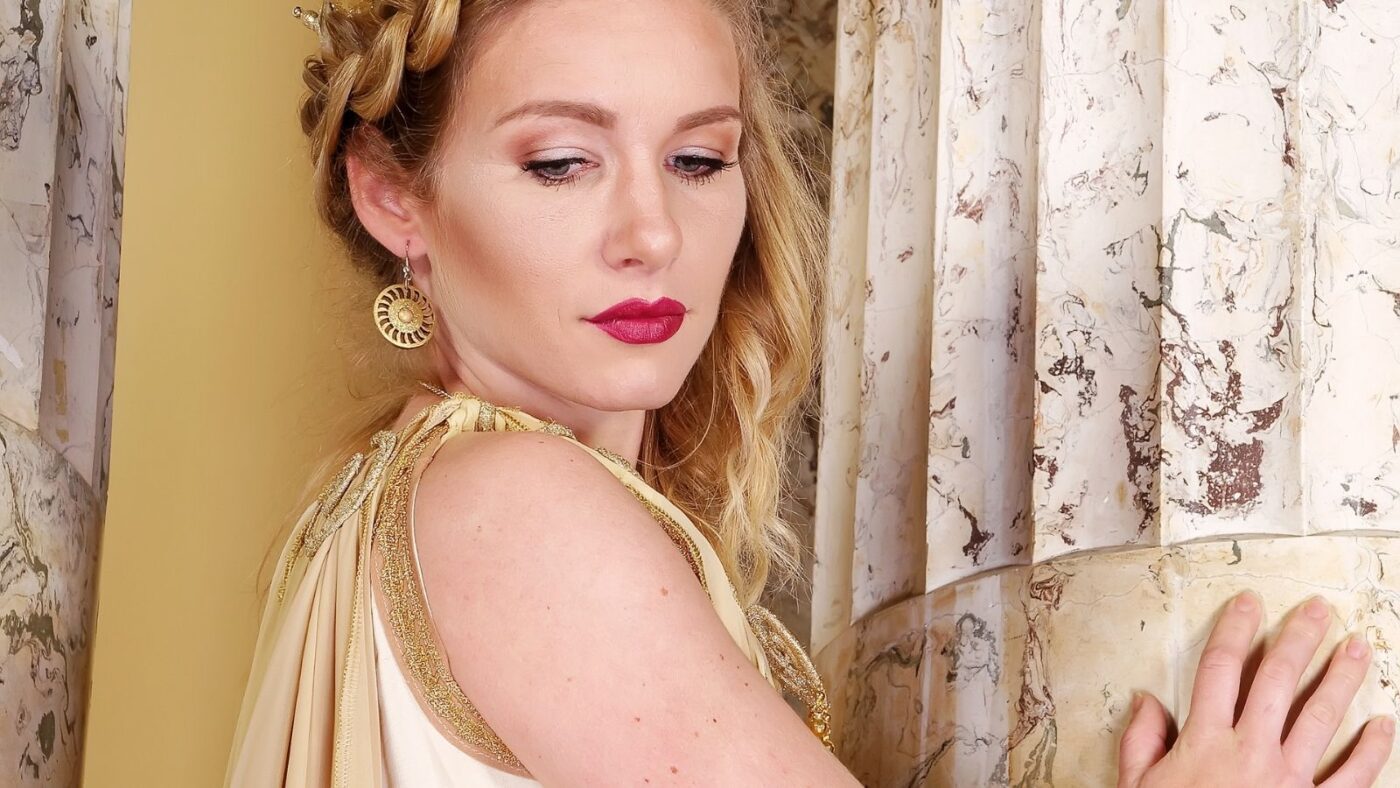
The Roman nose is a dominant anatomical structure with high projection relative to the overall face, characterized by a prominent bone-cartilage arch (dorsal hump) on the nasal bridge when viewed in profile, and a nasal tip that curves downward. Also known in medical terminology as an aquiline nose, this phenotype differs from other nose types due to volumetric excess of the nasal skeleton and low rotation of the nasal tip. Creating an aesthetically harsh and authoritative appearance, this morphology is a characteristic facial feature that emerges as a result of excessive development of the bony and cartilaginous vault in the Keystone area.
İçindekiler
How Can You Recognize the Roman Nose Type?
The most fundamental feature that distinguishes the Roman nose structure from other humped noses is its strong and dominant profile. When you look at yourself in the mirror from the side, after the transition between the forehead and the nasal root, you see a convex arc that begins and continues to the nasal tip. This arc creates a peak point on the dorsal part of the nose. For us physicians, this does not simply mean “a big nose”; it is the condition in which the cartilage and bone structure protrudes far enough to overshadow the other facial features.
In individuals with this nose type, what we call projection—the forward extension of the nose from the face—is generally excessive. In other words, the nose sits much farther forward relative to the face. In addition, especially during smiling, the nasal tip approaches the lips due to the activation of muscles that pull the nasal tip downward. This can give the face a harsher, older, or more tired expression than it actually has. The Roman nose is not only an aesthetic concern; it is the condition of an imbalanced overgrowth of a structure located at the very center of the face and decisive for facial expression.
The prominent physical features of the Roman nose type are as follows:
- High bony arch
- Prominent cartilaginous protrusion
- Low nasal tip
- Excessive nasal length
- Thick nasal skin
- Wide nasal bridge
What Is Different in the Anatomical Structure of This Nose Type?
Just as renovating a building without understanding its architecture is risky, planning surgery without understanding the anatomy of a Roman nose is just as risky. In this nose type, the problem is generally the excess of the bony and cartilaginous vault that forms the upper two-thirds of the nasal dorsum. The nasal dorsum is not a single block; the upper part is composed of hard bone, while the middle and lower parts are made of flexible cartilage.
In Roman noses, the key junction point we call the “Keystone,” where bone and cartilage meet, is quite high. This region is the most critical structural area that supports the nasal vault. In this phenotype, the bony and cartilaginous structures overlap to form that characteristic arch. Anatomically, not only are these structures large, but their connections to one another are also very tight, requiring extra precision in surgical planning. The architecture is too complex to be managed by simply rasping it down.
The main anatomical components that form this complex structure are as follows:
- Nasal bones
- Upper lateral cartilages
- Septal cartilage
- Keystone region
- Nasal tip cartilages
- Connective tissues
What Is the Effect of Roman Nose Aesthetics on Facial Harmony?
In facial aesthetics, the golden rule is always balance and proportion. A Roman nose, due to its volume and length, draws the focal point of the face entirely to itself. This is why, when speaking with someone, attention can involuntarily shift to the nasal hump rather than maintaining eye contact. This causes the person’s eye color, the depth of their gaze, or the shape of their lips to remain in the background.
Especially in profile analyses, a highly projected nose can create optical illusions in other areas of the face. For example, in a patient with a normal forehead, the forehead may appear flat because the nose is so far forward. Similarly, the cheekbones may become less noticeable. As surgeons, our goal is to make the nose a part of the face and prevent it from “shouting” that it is there. When the nose becomes harmonious with the face, the person’s gaze brightens and the facial features soften.
The positive changes in facial balance after aesthetic intervention are as follows:
- Eyes becoming more prominent
- Cheekbones becoming more apparent
- Lip shape becoming clearer
- Softening of the expression
- Achieving profile balance
- The face looking younger
What Is the Relationship Between the Jaw Structure and the Roman Nose?
When examining my patients with a Roman nose type, one of the first areas I almost always look at is the chin tip. Because this nose type is often accompanied by what we call “retrognathia,” a condition in which the chin is set back. This combination can bring the facial profile closer to a “bird face” appearance. When the chin is retruded, the already large nose can look much larger and more protrusive due to an optical illusion.
For this reason, focusing only on the nose would be a major mistake. If the chin is set back and we only reduce the nose, the profile balance may still not be achieved. In these cases, we proceed with a “profiloplasty” approach. That is, while bringing the nose to ideal dimensions, advancing the chin with a small touch in the same session (filler, fat injection, or an implant) is the key point that determines the perfection of the result. In this way, the face attains a more oval, more attractive, and more proportionate form.
Complementary procedures that can be applied to the chin area are as follows:
- Hyaluronic acid fillers
- Fat injection
- Chin implant
- Chin advancement surgery
How Are the Ideal Nasal Angle and Mathematical Ratios Determined?
Aesthetic surgery is the point where art meets mathematics. Although the concept of a “beautiful nose” varies from person to person, there are certain mathematical angles that are universally accepted and pleasing to the eye. When correcting a Roman nose, we do not perform a procedure “by eye.” The angle between the nasal tip and the lip (the nasolabial angle) is the most important key to naturalness.
How upturned the nasal tip should be is calculated according to gender and face shape. If we raise the nasal tip too much, an extremely artificial appearance can occur—commonly described as a “pig nose”—in which the nostrils are directly visible from the front. On the other hand, insufficient elevation can cause the nasal tip to droop again over time. Therefore, with millimetric calculations, we must find the most suitable angle for the person’s face.
The target ideal rotation angles by gender are as follows:
- 95 degrees in women
- 100 degrees in women
- 105 degrees in women
- 90 degrees in men
- 95 degrees in men
- 100 degrees in men
What Are the Symptoms of Breathing Problems and Septal Deviation?
Inside a Roman nose that looks humped and large from the outside, there is usually serious chaos. The more prominent and large the external nasal vault is, the more prone the central pillar inside—what we call the “septum”—is to trauma and bending. The vast majority of my patients with this nasal structure apply not only with aesthetic concerns but also with the complaint, “I can’t breathe.”
Septal deviation, that is, curvature of the nasal septum, disrupts airflow by narrowing the air passages. This is not just a simple nasal congestion; it is a systemic problem that affects the body’s oxygenation. Especially being unable to breathe comfortably during sleep causes the body not to rest properly. The patient wakes up tired in the morning and experiences loss of concentration during the day. For this reason, Roman nose surgeries are not only aesthetic operations but also functional surgeries that improve the patient’s quality of life.
Common complaints due to septal deviation are as follows:
- Chronic nasal congestion
- Sleeping with the mouth open
- Severe snoring
- Morning dry mouth
- Frequently recurring sinusitis
- Chronic headache
- Impaired sense of smell
- Postnasal drip
- Reduced exercise capacity
- Sleep apnea
Why Is the Preservation Rhinoplasty Method Important in the Surgical Process?
In traditional rhinoplasty methods, to eliminate the large hump in a Roman nose, the bony and cartilaginous vault would be cut and removed. You can think of this like cutting off the top of a house’s roof. This procedure causes an “open roof” deformity, and afterward the surgeon would need to fracture and reshape the bones to close this gap. Because this method caused more tissue damage, the healing process was more difficult, and in the long term, irregularities could form on the nasal dorsum.
However, today, especially for the Roman nose type, we prefer “Preservation Rhinoplasty” techniques. This philosophy is completely different. Without disrupting the natural, smooth arched structure on the nasal dorsum, we remove bone and cartilage from the base of the nose and lower the nose as a whole. You can think of it like an elevator descending a floor. The roof of the nose, its ligaments, and natural curves are preserved. Thanks to this technique, because the nasal dorsum is not disrupted, a much more natural appearance is achieved and the healing process accelerates incredibly.
The main advantages provided by the preservation rhinoplasty method are as follows:
- Preservation of nasal dorsum integrity
- Less edema formation
- Less bruising
- Fast healing process
- Natural nasal dorsum light reflection
- Preservation of breathing function
- Long-term stability
- Reduced revision risk
What Should Be Considered During the Healing Process?
The biggest source of concern for patients is usually the postoperative period. I often encounter questions such as, “Will I have a lot of pain?” and “Will the tampons hurt?” First of all, I should state that thanks to modern techniques and pain management, rhinoplasty is no longer a painful surgery. Patients usually talk about a feeling of fullness, like having the flu, rather than pain.
The old gauze packs are now history. Today, we use slippery silicone splints with a hole in the center that allow breathing. When removing them, the patient feels almost nothing. Mild swelling and bruising in the first few days are natural, but when we use preservation techniques, this remains at a minimal level. Our patients can return to their daily routines a few days after surgery, and one week later, when the cast on the nose is removed, they can fully rejoin social life.
Things to pay attention to in the postoperative period are as follows:
- Keeping the head elevated
- Regular ice application
- Keeping the inside of the nose moist
- Avoiding heavy exercise
- Not wearing glasses
- Protecting from the sun
- Avoiding impacts
- Avoiding hot baths
What Are the Non-Surgical Rhinoplasty Options?
Although “non-surgical” solutions have become popular with advancing technology, it is necessary to be realistic in conditions like the Roman nose where there is structural volumetric excess. Methods such as fillers and thread lifting are not a complete alternative to surgery. You cannot eliminate a large hump with filler; you can only camouflage it by filling around it, which can make an already large nose appear even larger.
However, there are also areas where these methods are very effective. For example, in patients who have contraindications to surgery, slightly lifting the nasal tip, or eliminating millimetric irregularities that may occur over the years after surgery, fillers are excellent tools. We surgeons generally prefer to use these minimally invasive methods for “touch-ups” or in very selected cases.
Situations in which non-surgical methods may be preferred are as follows:
- Mild nasal tip droop
- Nasal root depression
- Millimetric asymmetries
- Post-surgical touch-ups
- Health conditions preventing surgery
- Seeking temporary solutions
Is There a Difference in Approach Between Female and Male Patients?
One of the issues we pay the most attention to when correcting a Roman nose is preserving gender characteristics. Creating a curved and upturned nose like a female nose for a man completely eliminates the masculine expression on that person’s face and leads to unhappiness. Likewise, creating a very straight and harsh-lined nose for a woman can also disrupt the feminine expression.
In men, our main goal is to correct the hump while keeping the nasal dorsum straight (masculine) and maintaining the nasal tip at a 90–95 degree angle with the lip. The nose must preserve its strong character. In women, a very slight, elegant curve (supratip break) on the nasal dorsum and a slightly more upturned nasal tip increase elegance in the face. In both genders, our common aim is to achieve results that “do not look done,” that appear as if they naturally belong to the person’s face from birth.
The targeted aesthetic features in male patients are as follows:
- Straight nasal dorsum
- Strong nasal tip
- Less rotation
- Sharp lines
- Masculine profile
The targeted aesthetic features in female patients are as follows:
- Slightly curved dorsum
- Elegant nasal tip
- More rotation
- Soft transitions
- Feminine profile

Prof. Dr. Murat Songu – Burun Estetiği (Rinoplasti) Uzmanı
Prof. Dr. Murat Songu, 1976 yılında İzmir’de doğmuş, tıp eğitimini Ege Üniversitesi Tıp Fakültesi’nde tamamladıktan sonra Celal Bayar Üniversitesi Kulak Burun Boğaz Anabilim Dalı’nda uzmanlık eğitimini tamamlamıştır. 2005–2006 yıllarında Fransa’nın Bordeaux kentinde Prof. Vincent Darrouzet ve Dr. Guy Lacher gibi rinoloji alanının önde gelen cerrahlarıyla çalışarak rinoplasti, fonksiyonel burun cerrahisi ve kafa tabanı cerrahisi üzerine ileri eğitim almıştır.
Burun estetiğinde doğal görünüm, nefes fonksiyonunun korunması ve yüz estetiği dengesini ön planda tutan Prof. Dr. Songu, açık teknik rinoplasti, piezo (ultrasonik) rinoplasti, revizyon rinoplasti, burun ucu estetiği ve fonksiyonel septorinoplasti operasyonlarında ulusal ve uluslararası düzeyde tanınan bir cerrahtır. Yurt içi ve yurt dışında çok sayıda rinoplasti kongresinde eğitici ve konuşmacı olarak yer almış; yüz estetiği ve burun cerrahisinde modern tekniklerin yaygınlaşmasına öncülük etmiştir.
100’den fazla bilimsel yayını, kitap bölümü yazarlıkları ve 1700’ü aşkın uluslararası atfıyla rinoplasti alanında Türkiye’nin en saygın akademisyenlerinden biri olan Prof. Dr. Murat Songu, doğal, yüzle uyumlu ve fonksiyonel sonuçlar hedefleyen cerrahi yaklaşımıyla hem bilimsel hem estetik başarıları bir araya getirmektedir.