Türkçe
Nasal tip rotation is an aesthetic surgical procedure that allows the most distal part of the nose to be positioned upward or downward. Just like changing the angle of a door hinge, it creates a significant difference in facial balance by altering the angle at which the nasal tip stands in relation to the face. This procedure has the power to affect not only the shape of the nose but the entire facial expression.
To understand nasal tip rotation, let us first think of the nose like a building. Just as a building has a foundation, walls, and a roof, the nose has a bony framework, cartilaginous structures, and soft tissue layers covering them. The ideal angle of the nasal tip varies according to a person’s gender, age, and ethnic background. In women, a nasolabial angle (the angle between the base of the nose and the upper lip) between 95–105 degrees is generally preferred, whereas in men, an angle around 90–95 degrees provides a more masculine appearance.
| What It Is | Nasal tip rotation is a rhinoplasty technique that changes the angle of the nasal tip by rotating it upward or downward to achieve a more balanced and aesthetically pleasing appearance. |
| Primary Purpose | To improve facial harmony by adjusting the position and angle of the nasal tip while maintaining or enhancing nasal function. |
| Who May Be a Candidate | Individuals with a drooping, under-rotated, over-rotated, or disproportionate nasal tip who seek cosmetic or functional improvement. |
| Who May Not Be a Candidate | Individuals with unrealistic expectations, untreated medical conditions that increase surgical risk, active nasal infections, or those who are not medically fit for surgery. |
| Common Indications | Drooping nasal tip, downward-pointing nose, inadequate tip projection, age-related tip descent, congenital nasal shape concerns, or revision rhinoplasty cases. |
| Procedure Type | A surgical rhinoplasty technique that modifies the nasal tip by reshaping and repositioning the lower lateral cartilages and supporting structures. |
| Surgical Approaches | May be performed using either an open or closed rhinoplasty approach, depending on the complexity of the case. |
| Anesthesia | Usually performed under general anesthesia, although selected cases may be suitable for local anesthesia with sedation. |
| Procedure Duration | Typically 1.5–3 hours, depending on whether it is performed alone or combined with additional rhinoplasty procedures. |
| Hospital Stay | Commonly performed as an outpatient procedure or may require an overnight stay. |
| Preparation Before Surgery | Includes medical evaluation, review of medications, smoking cessation if applicable, preoperative photographs, and surgical planning. |
| Procedure Steps | The surgeon reshapes, repositions, or supports the nasal tip cartilages, adjusts the rotation angle, and may use cartilage grafts or suturing techniques to achieve stable, natural-looking results. |
| Recovery Time | Most patients return to light daily activities within 1–2 weeks, while complete healing and refinement continue over several months. |
| Common Temporary Effects | Swelling, bruising, nasal congestion, mild discomfort, temporary numbness, and tenderness around the tip of the nose. |
| Potential Risks and Complications | Bleeding, infection, asymmetry, over-rotation or under-rotation, breathing difficulties, persistent swelling, scarring, dissatisfaction with cosmetic results, or the need for revision surgery. |
| Warning Signs After Surgery | Heavy bleeding, fever, worsening pain, increasing redness, foul-smelling drainage, severe breathing difficulty, or sudden vision changes require immediate medical evaluation. |
| Expected Results | A more balanced nasal tip with improved facial proportions while maintaining a natural appearance and appropriate nasal support. |
| Longevity of Results | Results are generally permanent, although subtle age-related changes may occur over time. |
| Advantages | Improves nasal tip position, enhances facial balance, preserves or improves nasal function, and provides long-lasting aesthetic results. |
| Limitations | Healing is gradual, perfect symmetry cannot be guaranteed, and additional procedures may be required in complex cases. |
| Aftercare Instructions | Protect the nose from trauma, avoid strenuous activities, keep follow-up appointments, and follow all postoperative care instructions provided by the surgical team. |
| Follow-Up | Regular postoperative visits are recommended to monitor healing, evaluate nasal tip position, and assess the final outcome. |
| Suitability for International Patients | Suitable for medical travelers who can remain at the destination for initial recovery and postoperative evaluation before traveling home. |
| Travel Considerations | Patients should allow adequate recovery time before flying, minimize pressure on the nose during travel, and arrange follow-up care after returning home if necessary. |
| Return to Work | Most patients resume non-strenuous work within 1–2 weeks, depending on recovery progress and occupational demands. |
| Alternative Treatments | Full rhinoplasty, revision rhinoplasty, non-surgical rhinoplasty with dermal fillers for selected cases, or observation when surgery is not indicated. |
Anatomical Structure of the Nasal Tip
The nasal tip is like the visible part of an iceberg – beneath it lies a complex anatomical structure. Let us examine the main components that form this structure:
- Cartilaginous Structures
The most important structures determining the shape of the nasal tip are the lower lateral cartilages. These cartilages extend on both sides of the nose like a pair of wings and determine the shape of the nostrils. Each lower lateral cartilage is divided into two limbs called the medial (close to the midline) and lateral (extending outward) crus. The medial crura meet at the exact center of the nasal tip, determining the projection (forward prominence) of the nasal tip. The lateral crura extend toward the nasal wings and form the shape of the nostrils.
The domal region is the part where the medial and lateral crura of the lower lateral cartilages meet, rising like a dome. The shape and position of this region determine how pointed or rounded the nasal tip will appear. Just like the central pole of a tent, the position of the domal region affects the posture of the entire nasal tip.
- Support Structures
The columella is the column-like structure that separates the nostrils and supports the nasal tip. The septum, on the other hand, is like a wall dividing the inside of the nose into two and provides significant support to the nasal tip. These two structures carry the nasal tip like the legs of a table. If these supports are weak, the nasal tip may appear droopy or asymmetrical.
Ligamentous structures are flexible bands that connect different parts of the nose to each other. Like the ropes of a ship, these ligaments maintain the integrity of the nasal structure and provide stability during movement. The soft tissue envelope consists of the skin and fatty tissue forming the outer surface of the nose. The skin at the nasal tip is generally thicker and less elastic than in other areas of the face, which is an important factor that must be considered during surgical procedures.
- Muscular Structures
The depressor septi nasi muscle is a small but effective muscle that extends from the upper lip to the nasal tip and pulls the nasal tip downward during smiling. In some individuals, this muscle is more active and their nasal tips noticeably descend when they smile. This condition is referred to as “dynamic nasal tip ptosis” and must absolutely be considered in surgical planning.
Other facial expression muscles may also affect the movement and position of the nasal tip. For example, the procerus muscle pulls the nasal root downward when frowning, while the levator labii superioris alaeque nasi muscle elevates the nasal wings. The activity of these muscles determines the dynamic movements of the nasal tip according to the person’s facial expressions.
The Effect of Rotation on Facial Aesthetics
Nasal tip rotation directly affects facial proportions and overall aesthetics. The nasolabial angle (the angle between the base of the nose and the upper lip) is one of the most determining criteria of the facial profile. In women, a nasolabial angle between 95–105 degrees and in men between 90–95 degrees is considered aesthetically ideal. A change in this angle can create significant differences in a person’s facial profile.
- Aesthetic Evaluation Criteria
In facial aesthetics, the “rule of thirds” is an important criterion. According to this rule, the face is vertically divided into three equal parts: from the hairline to the eyebrows, from the eyebrows to the base of the nose, and from the base of the nose to the tip of the chin. The position of the nasal tip directly affects these proportions and plays a critical role particularly in the perception of the midface region.
In profile analysis, nasal tip rotation stands out as one of the most prominent points of the face. The nasal tip should create a harmonious balance between the tip of the chin and the forehead prominence. Excessive upward rotation may lead to a “pig nose” appearance, while excessive downward rotation may lead to a “parrot nose” appearance.
In the frontal view, nasal tip projection affects facial symmetry and proportions. An ideal nasal tip should demonstrate projection compatible with the width of the face and should be in a balanced relationship with the nasal wings.
- Gender Differences
In women, ideal nasal tip rotation is generally more upward, which provides a more feminine appearance. A nasolabial angle between 95–105 degrees is generally considered aesthetically attractive in women. This slight upward rotation adds a younger and more lively expression to the face.
In men, the ideal nasal tip rotation is more downward, with the nasolabial angle around 90–95 degrees. This straighter or slightly downward-facing nasal tip provides a masculine appearance. Excessive upward rotation in men may weaken the masculine character of the face.
Gender-specific aesthetic preferences may vary from culture to culture; however, generally a more elevated nasal tip is preferred in women, while a straighter nasal tip is preferred in men. These preferences also offer interesting findings from the perspective of evolutionary psychology; in women, a younger and more delicate appearance stands out, whereas in men, a stronger and more determined expression is emphasized.
- Ethnic Variations
Nasal tip anatomy shows significant differences among different ethnic groups. For example, Caucasian noses generally have thinner cartilage structures and a more defined nasal tip, while noses of Asian origin show thicker skin and less defined cartilage structures. In noses of African origin, there is generally a wider nasal base and less projection.
Cultural aesthetic preferences and the ideal rotation angle also vary according to ethnic origin. While a more defined and elevated nasal tip is generally preferred in Western societies, a more natural and less intervened appearance is at the forefront in Asian societies. These differences must absolutely be taken into consideration in surgical planning; because a rotation that is ideal for one ethnic group may appear incompatible for another.
Functional Effects
Nasal tip rotation is not only an aesthetic procedure; it may also affect nasal functions. Therefore, a delicate balance must be established between “beautiful” and “functional.”
- Effects on Breathing
The nasal valve angle is the narrowest region inside the nose through which air passes and is critically important in nasal breathing. Nasal tip rotation may change this angle. Upward rotation generally widens the nasal valve angle and may increase airflow. Therefore, upward rotation may be beneficial in patients with mild nasal obstruction.
Airflow dynamics are related to turbulence and resistance inside the nose. Nasal tip rotation may change the direction and speed of airflow. For example, excessive upward rotation may cause the nostrils to remain excessively open and the air to directly strike the upper respiratory tract. This may lead to problems such as dryness and irritation.
Achieving functional and aesthetic balance is the most important goal of a successful nasal tip rotation procedure. For an ideal result, both aesthetic expectations must be met and nasal breathing must be preserved or improved.
- Potential Functional Problems
Problems that excessive rotation may cause include excessive visibility of the nostrils (show), intranasal dryness, and nasal valve collapse. Especially in patients with thin skin, excessive rotation may cause the cartilage edges to become visible and lead to an unnatural appearance.
The effects of insufficient rotation are generally the nasal tip appearing droopy and covering the upper lip. This condition becomes more prominent especially during smiling and may cause the face to appear older and tired. It may also lead to narrowing of the nostrils and difficulty in nasal breathing.
Types and Classification of Rotation
Nasal tip rotation may be classified in different ways. These classifications guide surgical planning and the management of patient expectations.
- In Terms of Direction
Cephalic (upward) rotation is the rotation of the nasal tip upward. This increases the nasolabial angle and causes the nostrils to become more visible. It is generally preferred in patients with a droopy nasal tip or in female patients who desire a more feminine appearance.
Caudal (downward) rotation is the rotation of the nasal tip downward. This decreases the nasolabial angle and makes the nostrils less visible. It is generally applied in patients with an excessively elevated nasal tip or in male patients who desire a more masculine appearance.
- In Terms of Degree
Mild rotation creates a change of 5–10 degrees in the nasolabial angle. This minimal change is generally preferred in patients who want to preserve a natural appearance and is often noticeable only by close acquaintances.
Moderate rotation creates a change of 10–15 degrees in the nasolabial angle. It creates a noticeable change but still remains within natural limits. This is the ideal degree of rotation for most patients.
Marked rotation creates a change of more than 15 degrees in the nasolabial angle. Such dramatic changes may be applied in patients with severe deformities or very specific aesthetic expectations, but it carries the risk of moving away from a natural appearance.
- In Terms of Technique
Structural rotation techniques provide permanent rotation by changing the cartilage framework of the nasal tip. These include cartilage grafts, suture techniques, and cartilage cutting (resection) procedures. These techniques provide more permanent results but require more complex surgical skill.
Non-structural rotation techniques create a rotational effect by minimally changing or not changing the cartilage framework. These include columella-septal sutures, soft tissue manipulations, and filler materials. These techniques are generally less invasive but their results may be less permanent.
Nasal tip rotation plays a critical role in facial aesthetics and, when planned correctly, may provide satisfying results both aesthetically and functionally. However, since each patient’s anatomical structure and aesthetic goals are different, a personalized approach is essential. Just like a sculptor shaping marble, the surgeon must plan a nasal tip rotation suitable to each patient’s natural facial features and expectations.
The Initial Consultation Process
The first consultation for nasal tip rotation is like the starting point of a journey. In this critical meeting, a bridge is built between the nose in the patient’s imagination and medical realities. Just like the first meeting between an architect and a homeowner, this initial consultation between the surgeon and the patient directly affects the success of the result.
- Consultation Stages
During the first meeting, the surgeon tries to get to know the patient first as a person and then as a patient. This process, which begins with questions such as “What bothers you about your nose?”, “What kind of change do you imagine?”, “Have you had nasal surgery before?”, aims to understand the patient’s expectations and motivation. A standard consultation usually lasts 30–45 minutes, and during this time the patient has the opportunity to ask all questions and express concerns.
- Medical History Taking
A detailed medical history is the foundation of safe surgical planning. Previous nasal surgeries are of critical importance, especially in patients for whom revision surgery is planned. It is questioned when the previous surgery was performed, by whom, and with which technique. If available, photographs and medical records of the previous surgery are examined.
A history of trauma helps in understanding deformities resulting from nasal fractures or impacts. Questions such as “Have you ever received a blow to your nose?” or “Have you had a nasal fracture?” may clarify underlying structural problems.
Breathing problems, nasal obstruction, snoring, or sleep apnea are functional problems that affect surgical planning. Because nasal tip rotation may improve these problems or may worsen them.
Allergic conditions, especially seasonal allergies or chronic sinusitis, may affect the condition of the nasal mucosa and postoperative healing. Drug allergies are also important in anesthesia and postoperative medication selection.
Medications used, especially blood thinners, are medications that must be discontinued before surgery. In addition, some herbal supplements may increase bleeding risk. Therefore, all prescription or non-prescription medications and supplements are questioned.
- Physical Examination
A detailed nasal examination is like a process of collecting clues like a detective. The surgeon examines both externally and the inside of the nose with special instruments. During the examination, the nasal skin, cartilage structure, condition of the septum, and the shape of the nostrils are evaluated. In addition, nasal breathing is tested and the location of any obstruction is determined.
Examination techniques include palpation (manual examination), intranasal endoscopy, and widening of the nostrils (Cottle maneuver). These techniques help in evaluating cartilage strength, septal deviation, and nasal valve function.
- Photograph Analysis
Standard photograph positions are an indispensable part of surgical planning. Generally, photographs are taken from the front, side (both profiles), oblique (45 degrees), and from below (to show the nostrils). These photographs are used both in surgical planning and in “before-after” comparisons.
Digital imaging and simulation are an important part of modern consultations. Possible surgical results may be simulated using computer programs. However, these simulations are not a guarantee of a definite result but are only intended to provide an idea. Just like a sketch by a painter, the final result may be different.
Setting goals together with the patient is perhaps the most critical stage of the consultation. The surgeon and the patient determine realistic goals by talking over photographs and simulations. Questions such as “Is it possible to lift this angle a little more?” or “Will my nostrils become too visible?” are answered at this stage.
Candidate Evaluation Criteria
Determining suitable candidates for nasal tip rotation is critically important for successful results. Just like selecting candidates who will participate in a competition, there are certain criteria for this procedure.
- Ideal Candidates
Among the anatomical suitability criteria are adequate cartilage support, appropriate skin thickness, and healthy tissue structure. For example, in patients with very thick skin, small cartilage changes may not be visible from the outside, and therefore more aggressive techniques may be required.
Psychological readiness is at least as important as physical suitability. The patient must be able to realistically understand and accept the limits of the procedure and possible results. Psychological conditions such as body dysmorphic disorder may constitute a contraindication to surgery.
The age factor is important especially in young individuals whose development has not yet been completed. Aesthetic nasal surgery is generally not recommended before the age of 16 in girls and 17–18 in boys. Because nasal development may not yet be complete and early intervention may negatively affect growth.
General health status is important for nasal tip rotation as in any surgical procedure. Conditions such as uncontrolled diabetes, hypertension, or bleeding disorders may increase surgical risk.
- Contraindications
Absolute contraindications are conditions in which the procedure should definitely not be performed. These include active infection, uncontrolled psychiatric disorders, and health conditions unsuitable for anesthesia.
Relative contraindications are conditions that increase the risk of the procedure but do not constitute an absolute barrier. Smoking, controlled diabetes, or mild hypertension fall into this group. In such cases, a risk-benefit analysis is performed to make a decision.
Risk factors are conditions that increase the likelihood of complications. For example, thick skin structure, weak cartilage support, or previous nasal surgeries are risk factors that may affect the result.
- Special Situations
Revision surgery candidates are a special group of patients. In patients who have previously undergone nasal surgery, there are challenges such as scar tissue, altered anatomy, and reduced cartilage reserve. In these patients, managing expectations and determining realistic goals are even more important.
Patients who require combined procedures may need septoplasty, turbinate reduction, or other facial aesthetic procedures in addition to nasal tip rotation. In this case, all procedures must be planned in harmony with each other.
Ethnic features and evaluation require consideration of cultural and anatomical differences. For example, in a patient of Asian origin, excessive rotation according to Western standards may lead to an unnatural appearance. Each ethnic group has its own unique beauty standards and anatomical features.
Surgical Approaches: Open and Closed Technique
There are two basic approaches in nasal tip rotation surgery: open (external) and closed (endonasal) technique. We can liken these two approaches to reading a book. The closed technique is like trying to read the book while keeping it closed – it is difficult but leaves no mark. The open technique is like fully opening the book and reading it comfortably – everything is clearly seen but a small mark remains on the cover.
- Open Technique (External Approach)
In the open technique, a small incision is made on the middle column called the columella at the nasal tip. This transcolumellar incision is generally in the shape of an “inverted-V” or “broken line” and is combined with incisions inside the nostrils. In this way, the nasal skin is lifted upward and all underlying cartilage and bone structures can be seen directly.
The greatest advantage of this technique is that the surgeon can see the nasal anatomy three-dimensionally and completely. Just like opening the cover to repair the inside of a watch, seeing the complex structures inside the nose provides a more precise and controlled surgery.
Advantages:
The most important advantage of the open technique is that it provides a wide surgical field of view. The surgeon can work by directly seeing all cartilage structures at the nasal tip. This is vitally important especially in complex cases.
Bilateral symmetry control is much easier in the open technique. The surgeon can compare the cartilage on both sides side by side and achieve symmetrical results. This is critical for the nasal tip to appear balanced and natural.
Among the reasons for preference in complex cases are previously operated noses, post-traumatic deformities, and severe asymmetries. In these cases, scar tissue and altered anatomy inside the nose can only be corrected by direct visualization.
Its advantages in terms of education cannot be ignored. The open technique enables assistants and students to better understand nasal anatomy and surgical techniques. Therefore, it is frequently preferred in academic centers.
Disadvantages:
The most obvious disadvantage of the open technique is leaving a small scar on the columella. Although this scar becomes almost invisible over time in most patients, it may be more prominent in some patients, especially those with dark skin.
Prolonged edema duration is another disadvantage. Due to more dissection of subcutaneous tissues, swelling may persist longer and the final result may take longer to appear.
Longer operation time may be a disadvantage, especially for inexperienced surgeons. Lifting the skin and then closing it again requires additional time. However, in experienced hands this difference may be minimal.
- Closed Technique (Endonasal Approach)
In the closed technique, all incisions are made inside the nostrils and no visible scar remains from the outside. Intranasal incisions are generally made along the edges of the cartilage and the cartilage is reached through these incisions.
The absence of scar formation is the greatest advantage of this technique. When viewed from the outside, there is no clue of surgery. This is an important reason for preference especially in patients who are concerned about scar formation.
The requirement of experience is perhaps the most important difficulty of the closed technique. The surgeon works in a limited field of view, almost with a “touch and feel” method. This requires a long learning curve and may be risky in inexperienced hands.
Advantages:
The absence of visible scar is the most attractive feature of the closed technique. Since all incisions remain inside the nose, no surgical scar is seen from the outside. This is an important advantage especially in patients prone to keloid formation.
Shorter recovery time is generally due to less tissue dissection. Swelling and bruising resolve faster and the patient may return to social life earlier.
Preservation of natural support structures may provide better long-term results in some cases. Less separation of the skin from the cartilage helps preserve natural connections.
Disadvantages:
Limited field of view is the greatest difficulty of the closed technique. The surgeon cannot fully see the structures inside the nose and must mostly rely on tactile sensation and experience.
Technical difficulty is particularly evident in complex cases. Working in a narrow area with limited visibility requires high technical skill and experience.
The difficulty in asymmetry control arises from the inability to see bilateral structures at the same time. This may create problems especially in asymmetric noses and may be difficult to correct.
Step-by-Step Explanation of the Procedure
Nasal tip rotation surgery is a complex procedure that requires precise planning and careful application. Just like an artist creating a sculpture, the surgeon shapes the nasal tip step by step.
- Preoperative Preparation
Anesthesia preparation is the first step of the procedure. Nasal tip rotation is generally performed under general anesthesia, but in some cases local anesthesia and sedation may also be used. The anesthesiologist determines the most appropriate method according to the patient’s health condition and the surgeon’s preference.
The sterilization protocol is critical to minimize infection risk. The surgical field is cleaned with antiseptic solutions and covered with sterile drapes. The surgeon and the team use sterile gowns, gloves, and masks.
Patient positioning is generally supine. The head is slightly elevated and stabilized. This position both facilitates surgical access and improves the field of view by allowing blood to move away from the face.
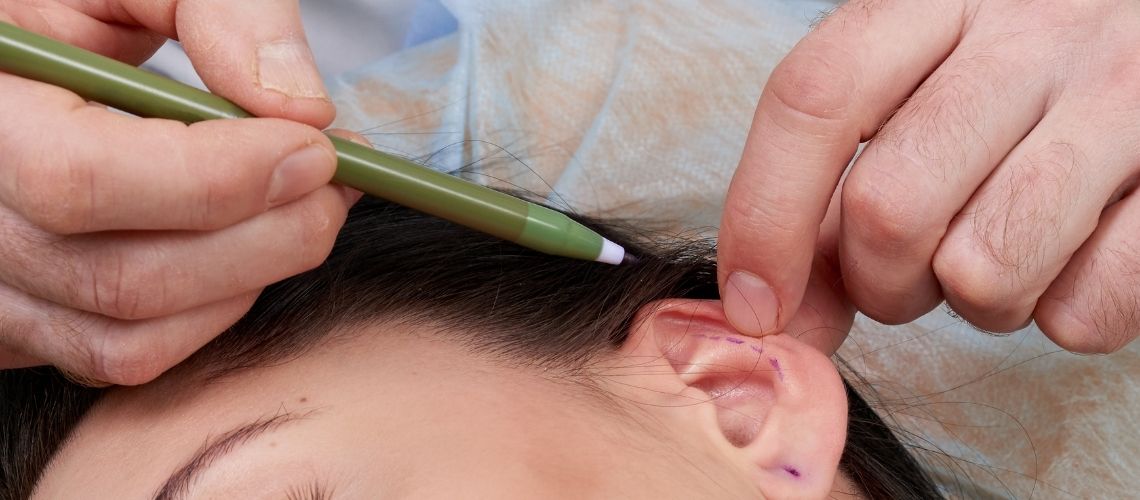
Marking techniques include drawing the surgical plan on the skin. The surgeon marks the planned incision sites, cartilage modifications, and rotation angle. These markings serve as a guide during surgery.
- Surgical Stages
- Anesthesia and Incision
The choice of local or general anesthesia depends on the patient’s preference, the surgeon’s experience, and the complexity of the planned procedure. General anesthesia increases patient comfort and allows the surgeon to work more comfortably. Local anesthesia offers faster recovery and less risk.
Vasoconstrictor injection is important for bleeding control. Generally, a lidocaine solution containing adrenaline is injected under the nasal skin. This both prevents pain and reduces bleeding by constricting the vessels.
Determining the incision sites depends on the selected technique. In the open technique, an inverted-V incision is made on the columella and combined with incisions inside the nostrils. In the closed technique, all incisions remain inside the nostrils.
- Tissue Dissection
Skin elevation techniques include separating the nasal skin from the underlying cartilage and bone structures. This is done gently with special instruments. The aim is to provide sufficient field of view without damaging the skin.
Exposure of the cartilage structures is a critical stage of nasal tip rotation. The lower lateral cartilages, septum, and upper lateral cartilages are made visible. The current condition of these structures is evaluated and preparations are made for the planned changes.
Preservation of anatomical planes is vitally important for long-term results. The surgeon must work while preserving the natural tissue layers. Excessively aggressive dissection may lead to scar tissue formation and unnatural results.
- Rotation Techniques
Cartilage resection includes the removal of excess cartilage tissue. For example, in the cephalic trim technique, some tissue is removed from the upper part of the lower lateral cartilages to allow the nasal tip to rotate upward. However, excessive resection may cause loss of support in the long term and lead to drooping of the nasal tip.
Cartilage repositioning includes changing the position of existing cartilage. For example, rotating the lateral crura medially may provide upward rotation of the nasal tip. Since this technique provides shape change without removing tissue, it may provide more natural and permanent results.
Suture techniques are gaining more and more importance in nasal tip rotation. Various sutures such as domal sutures, interdomal sutures, and septocolumellar sutures are used to reshape the cartilage. These techniques are popular because they are minimally invasive and provide natural results.
The use of grafts may be necessary especially in patients with weak support structures. A columellar strut graft provides support to the nasal tip and preserves rotation. A shield graft provides projection and definition to the nasal tip. These grafts are generally taken from the patient’s own septal cartilage.
- Fine Adjustments
Symmetry control is a critical part of the surgical process. The surgeon checks the symmetry of the nasal tip at every stage and makes corrections if necessary. In the open technique, this control is easier because the structures on both sides can be seen at the same time.
Projection evaluation measures how far the nasal tip protrudes from the face. As rotation increases, projection may decrease, so it is important to establish a balance between these two parameters. The surgeon evaluates the amount of projection both from profile and frontal view.
Tip plasty details include the fine adjustments of the nasal tip. Factors such as domal definition, lobular width, and the degree of tip sharpness are adjusted with small interventions. These details ensure that the final result is natural and aesthetic.
- Closure
Anatomical closure of the layers is important for long-term results. Each tissue layer should be closed in its anatomical position and without tension. This minimizes scar formation and supports natural healing.
Suture selection and techniques vary for different tissue layers. Absorbable sutures are generally preferred for deep tissues, while fine and atraumatic sutures are preferred for the skin. The columellar incision must be closed especially carefully because the scar here will be visible.
Application of splint and packing is performed to control postoperative swelling and bleeding. The external splint preserves the nasal shape and provides protection against impacts. Internal packings are used for bleeding control and to fix the septum in the midline. Packings are generally removed after 24–48 hours and the splint after 7–10 days.
Technical Considerations Evaluated by Surgeons
For a successful nasal tip rotation, there are critical technical details that surgeons pay attention to. These considerations are evaluated according to each patient’s unique anatomy and the surgical plan is personalized accordingly.
Anatomical Evaluations
Cartilage Quality
- Cartilage strength and flexibility directly affect the selection of surgical technique. Strong and flexible cartilages respond well to suture techniques and are easier to shape. Weak or fragile cartilages may require more support.
- Age-related changes affect cartilage structure. As aging occurs, cartilages harden and lose elasticity. Therefore, cartilage shaping may be more difficult in elderly patients and the risk of fracture increases.
- Ethnic differences show significant variations in cartilage structure. For example, while Caucasian noses generally have stronger and more defined cartilage, noses of Asian origin have weaker and flatter cartilage. These differences affect the selection of surgical technique.
Skin Thickness
- Thin skin characteristics cause cartilage changes to be more noticeable. This may be both an advantage and a disadvantage. Thin skin makes even small changes visible, but it also reveals irregularities and asymmetries.
- Thick skin challenges are particularly evident in nasal tip definition. Thick skin may mask the underlying cartilage changes and may require more aggressive techniques. In addition, postoperative swelling may last longer in patients with thick skin.
- Sebaceous skin type is a thick and porous skin structure rich in sebaceous glands. In this skin type, it is more difficult to obtain nasal tip definition and results may be less pronounced. In addition, the risk of scar and cyst formation is higher in these patients.
Support Mechanisms
- Major tip support structures are the main elements that preserve the position and shape of the nasal tip. These include the connection of the medial crura to the septum, the connection of the lateral crura to the piriform aperture, and the strength and shape of the lower lateral cartilages.
- Minor tip support structures are secondary elements that provide additional support to the nasal tip. These include the skin-SMAS connection, interdomal ligaments, and seromucosal membranes. Although these structures may seem less important than major supports, they contribute to the overall support mechanism.
- Risks of support loss are particularly high in patients who undergo aggressive cartilage resection. Excessive weakening of support structures may look good in the short term but may lead to drooping of the nasal tip, asymmetry, and functional problems in the long term.
Surgical Planning Factors
Degree of Rotation
- Calculation of the optimal rotation angle is made according to the patient’s gender, age, ethnic origin, and facial proportions. As a general rule, the nasolabial angle should be between 95–105 degrees in women and 90–95 degrees in men. However, these values should be individualized.
- Among the risks of excessive rotation are “pig nose” appearance, excessive visibility of the nostrils, and a shortened appearance of the upper lip. In addition, excessive rotation may also cause functional problems because intranasal airflow changes.
- Problems of insufficient rotation are generally the nasal tip appearing droopy and creating an aged expression. Especially during smiling, the nasal tip may descend further and cover the upper teeth. This condition causes the face to appear tired and aged.
Projection Balance
- The rotation-projection relationship is one of the fundamental principles of nasal aesthetics. As rotation increases, projection generally decreases, so it is important to establish a balance between these two parameters. Excessive rotation and insufficient projection may cause the nasal tip to appear “flattened.”
- Techniques to achieve balance include columellar strut graft, shield graft, and repositioning of the lateral crura. These techniques help control both rotation and projection. The surgeon should select the most appropriate technique according to each patient’s anatomy and aesthetic goals.
Long-Term Stability
- Scar tissue formation is inevitable after surgery and may affect nasal shape over time. Scar tissue may initially be firm and thick but softens and matures over time. This process plays a role in the emergence of the final result.
- The effect of gravity may pull the nasal tip downward especially in the long term. Therefore, the surgeon generally performs a slight “overcorrection,” meaning leaving the nasal tip in a slightly more upward rotation. This compensates for the slight drooping that will occur over time.
- The aging process affects all facial tissues including the nose. Cartilages harden, the skin loses elasticity, and support structures weaken. These changes may affect the position and shape of the nasal tip. The surgeon should plan by anticipating these long-term changes.
Complication Prevention Strategies
- Prevention of vascular damage is particularly important in the nasal tip and columella region. These areas have a rich blood supply and require careful dissection. The surgeon should work while preserving vessels and avoiding excessive tension.
- Symmetry control should be performed at every stage. The surgeon evaluates symmetry both during surgery and in postoperative follow-ups and makes corrections if necessary. Asymmetry is one of the most common causes of patient dissatisfaction.
- Prevention of functional problems is as important as aesthetic concerns. The surgeon should evaluate nasal valve function to preserve or improve nasal breathing and provide support if necessary. Excessively aggressive techniques should be avoided.
- Reducing the need for revision is possible with careful planning and precise surgical technique. The surgeon should adopt a personalized approach suitable for each patient’s anatomy and expectations and avoid overcorrections.
The selection and application of surgical technique should be personalized according to each patient’s individual anatomy, the surgeon’s experience, and the preferred outcome. Successful results are achieved with careful planning, precise technical application, and respect for anatomical principles. Just like a sculptor shaping marble, the surgeon should see each patient’s nose as a unique work of art.
Immediate Postoperative Experiences
The period immediately after nasal tip rotation surgery is the phase that patients are most curious and concerned about. You can think of this period as the first steps of a journey – it may be somewhat challenging but it will take you to a beautiful view. Knowing what is experienced during this period ensures that patients are psychologically prepared.
- First Hours
The process of waking from anesthesia generally covers the first 1–2 hours after leaving the operating room and being taken to the recovery room. During this process, you may feel mild numbness, dryness in the throat, and blurred vision. Nurses regularly check your vital signs and evaluate your pain level.
Among the first discomforts felt are nasal congestion, dryness in the throat, and a feeling of tightness in the face. If you have nasal packing, you will have to breathe through your mouth and this causes dryness in the throat. The feeling of tightness in your face is a normal sign of swelling.
The pain management protocol generally includes painkillers given at regular intervals. Most patients do not experience severe pain after nasal tip rotation; rather, there is more of a feeling of pressure and discomfort. Painkillers are sufficient to control this discomfort.
Breathing in the presence of nasal packing is one of the most challenging experiences in the first days. Since packings block the nostrils, you have to breathe through your mouth. This may affect sleep quality and cause dry mouth. Drinking plenty of water and using lip moisturizers is beneficial.
- First 24–48 Hours
Physical Symptoms:
Swelling of the face and around the eyes peaks within the first 24–48 hours after surgery. This swelling descends from top to bottom due to the effect of gravity. While there may be swelling around the eyes on the first day, swelling may be seen around the cheeks and lips on the second day. This is part of the body’s natural healing process.
The bruising pattern varies from person to person but is generally seen around the eyes in the form of “panda eyes.” Bruises are dark purple or blue in the first days, then turn green and yellow, and eventually disappear completely. Some patients experience no bruising, while in others it may be prominent.
The feeling of nasal congestion is unavoidable in the first days due to the packings. Even after the packings are removed, congestion may continue for a while due to internal swelling. This condition usually improves gradually within 1–2 weeks.
Mild bleeding or discharge may be seen especially after packings are removed. This is generally in the form of a pink or reddish fluid and may last a few days. In case of excessive or bright red bleeding, you should contact your doctor.
Patient Experience:
Sleeping position difficulties are one of the most common problems experienced in the first days after surgery. It is recommended that you keep your head elevated (using at least 2–3 pillows) and lie on your back. Lying on your side may put pressure on your nose and increase swelling. This position may be difficult for patients who are not accustomed to it, but it is important to accelerate the healing process.
Adaptation in eating and drinking is especially necessary while packings are present. Soft, easy-to-chew foods should be preferred. Avoiding very hot beverages and spicy foods reduces the risk of bleeding. Using a straw is also not recommended because the sucking motion increases the risk of bleeding.
Speech and facial expression limitations may occur due to facial swelling and discomfort. Excessive talking or laughing creates movement in the nasal region and may increase discomfort. Limiting facial expressions in the first days supports healing.
Daily activity limitations are important for the first week after surgery. You should avoid heavy lifting, bending, exercising, and any activity that may put pressure on the nasal area. These activities may increase bleeding risk and delay healing.
- Home Care Process
Medication instructions are given in detail by your doctor. Generally, painkillers, antibiotics, and sometimes steroids to reduce swelling are prescribed. It is important to use medications exactly at the indicated dose and duration. Especially antibiotics should be completed as a full course.
Cold compress application is effective in reducing swelling and bruising. During the first 48 hours, you may apply cold compress for 20 minutes and take a 10-minute break. However, you should apply the ice pack not directly to your nose but to the eye area and cheeks. You should avoid applying direct pressure on the nose.
Hygiene rules are important to reduce infection risk. You should wash your hands frequently and avoid touching your nose. You may use saline sprays recommended by your doctor for intranasal cleaning. While taking a shower, you should be careful not to wet the splint.
The list of prohibited activities generally includes: exercising, heavy lifting, bending, wearing glasses, blowing your nose, smoking, and consuming alcohol. These activities may increase bleeding risk, worsen swelling, or delay healing. Your doctor will inform you how long these restrictions will last.
Patient Experience in Healing Phases
In each healing phase, patients experience different physical and emotional processes. Knowing these experiences beforehand makes it easier to get through the process. Just like having a map, knowing where you are and where you are going makes the journey less stressful.
- Early Period Challenges
Physical Discomforts:
Nasal congestion and mouth breathing are the most prominent discomforts in the first days. Due to packings and internal swelling, breathing through the nose becomes difficult and you have to breathe through your mouth. This may cause throat dryness and deterioration in sleep quality. Using a room humidifier and drinking water frequently may be beneficial.
Changes in taste and smell may occur due to nasal congestion and mucosal swelling. You may not fully taste foods or perceive odors. This condition usually improves as the nose opens.
The feeling of facial tightness occurs due to swelling and may make facial expressions difficult. You may feel mild discomfort while smiling, talking, or eating. This tightness decreases as swelling subsides.
Deterioration in sleep quality may occur due to both physical discomfort and sleep position restrictions. Having to lie on your back with your head elevated may be an unfamiliar position and may affect your sleep quality. Supporting yourself with soft neck pillows and additional pillows may help.
Psychological Process:
Appearance anxiety is common in the early postoperative period. Due to swelling and bruising, your nose and face may look so different that they may seem unrecognizable. Thoughts such as “Will this swelling ever go away?” or “Did I make the right decision?” are normal and temporary.
Impatience and curiosity about the result are emotions experienced by most patients. You may be eager to see the final result, but healing takes time. During this process, looking at “before-after” photos or reviewing the healing processes of similar cases may be reassuring.
A feeling of social isolation may occur if you avoid social environments due to changes in your appearance. During this period, spending time with supportive family members and friends or joining online support groups may be beneficial.
A feeling of regret (temporary) may occur due to postoperative discomfort and changes in appearance in the first days. The thought “I wish I hadn’t done it” is normal during this period and usually passes as swelling decreases and results become clearer.
- Mid-Term Adaptation
Returning to daily routine usually begins from the second week. You may return to work or school and perform basic daily activities. However, you will still have some restrictions and it may take some time to regain your full energy.
Integration into social life occurs gradually. You may first start with small meetings with close friends and family, then enter larger social environments. Some patients may worry about how to explain the change in their nose. Being honest or simply saying “I had a minor aesthetic procedure” depends on personal preference.
Getting used to the change in appearance is a process for both you and those around you. Every day you will see slightly less swelling and a slightly more defined nose in the mirror. Over time, you adopt and get used to your new appearance.
An increase in self-confidence is usually felt as swelling decreases and your new nose becomes more defined. Features that previously bothered you are now corrected, which may increase your self-confidence. If you no longer avoid posing in photographs or hesitate to show your profile, this is a positive sign.
- Late-Term Satisfaction
Making peace with the final result usually occurs between 6–12 months. At this point, your nose has taken its final shape and you can fully evaluate the results. Although most patients are satisfied with the result, some may still not find small details perfect. Instead of perfectionism, it is important to focus on overall improvement.
Internalizing the new appearance occurs over time. When you look in the mirror, you now see your new nose as “your nose” and may have difficulty remembering your previous appearance. This is a sign that the change has been fully embraced.
An increase in quality of life is felt especially if features that bothered you before surgery have been corrected. You may feel more comfortable in social interactions, pose more confidently in photographs, or breathe better.
Satisfaction with the surgery decision is a feeling most patients experience in the long term. The initial difficulties and temporary feelings of regret are left behind and replaced by feelings of satisfaction and fulfillment.
- Patient Support Systems
Family and Friend Support:
Care assistance is important especially in the first days after surgery. Having someone to prepare meals, remind you of medications, and take you to the doctor if necessary makes the recovery process easier.
Emotional support is as important as physical help. The presence of people with whom you can share your concerns, who will listen to you and encourage you, accelerates your psychological recovery.
Providing motivation is valuable especially when you feel impatient or worried about the results. People who remind you of your progress during healing and help you focus on the positive aspects keep your motivation high.
Professional Support:
Regular doctor check-ups are important to ensure that the healing process is progressing correctly. These check-ups provide an opportunity to detect possible complications early and intervene if necessary.
Nurse follow-up is particularly valuable in the first days after surgery. Nurses guide you regarding dressing changes, medication use, and daily care.
Psychological support (if necessary) may be beneficial for some patients. Especially if you experience long-term concerns about body image or have difficulty in the postoperative adaptation process, consulting a psychologist or psychiatrist may be helpful.
The healing process is not only a physical but also an emotional journey. Each stage has its own unique challenges and beauties. Patience, adaptation, and a positive perspective play a critical role in successfully completing this process. Just like a seed transforming into a flower, your nose will take shape over time and reach its final beauty.
Frequently Asked Questions
What does nasal tip rotation mean in rhinoplasty and why is it important?
How do anatomical foundations influence nasal tip rotation during rhinoplasty?
What factors determine the ideal amount of nasal tip rotation for each patient?
Can nasal tip rotation improve both nose appearance and breathing function?
What surgical techniques are commonly used to modify nasal tip rotation?
What are the potential risks of changing nasal tip rotation during rhinoplasty?
How long does it take to see the final results after nasal tip rotation surgery?
How does skin thickness affect nasal tip rotation after rhinoplasty?
Can nasal tip rotation change naturally over time after rhinoplasty?
Why is understanding nasal tip anatomy essential before rhinoplasty?
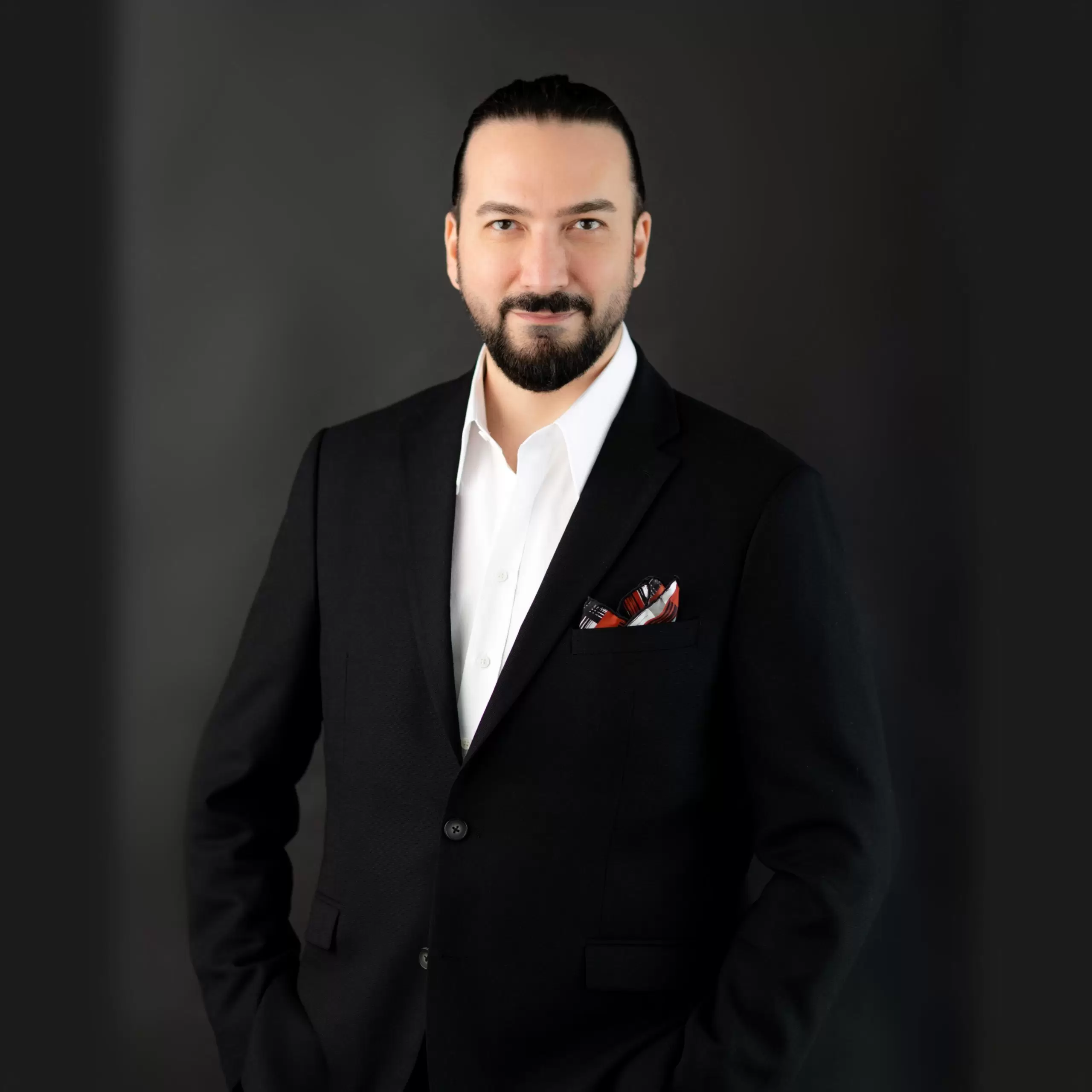
Prof. Dr. Murat Songu – Rhinoplasty (Nose Aesthetics) Specialist
Prof. Dr. Murat Songu was born in 1976 in Izmir and completed his medical education at the Ege University Faculty of Medicine. He then completed his residency training in the Department of Otorhinolaryngology at Celal Bayar University. Between 2005 and 2006, he received advanced training in rhinoplasty, functional nasal surgery, and skull base surgery in Bordeaux, France, working with leading rhinologists such as Prof. Vincent Darrouzet and Dr. Guy Lacher.
Prioritizing natural appearance, the preservation of breathing function, and facial aesthetic harmony, Prof. Dr. Songu is nationally and internationally recognized for his expertise in open rhinoplasty, piezo (ultrasonic) rhinoplasty, revision rhinoplasty, tipplasty, and functional septorhinoplasty. He has participated as an instructor and speaker at numerous rhinoplasty congresses worldwide.
With over 100 scientific publications, book chapters, and more than 1700 citations, Prof. Dr. Murat Songu is one of Türkiye’s most respected academics in the field of rhinoplasty, combining natural, facially harmonious, and functional results with scientific and aesthetic excellence.