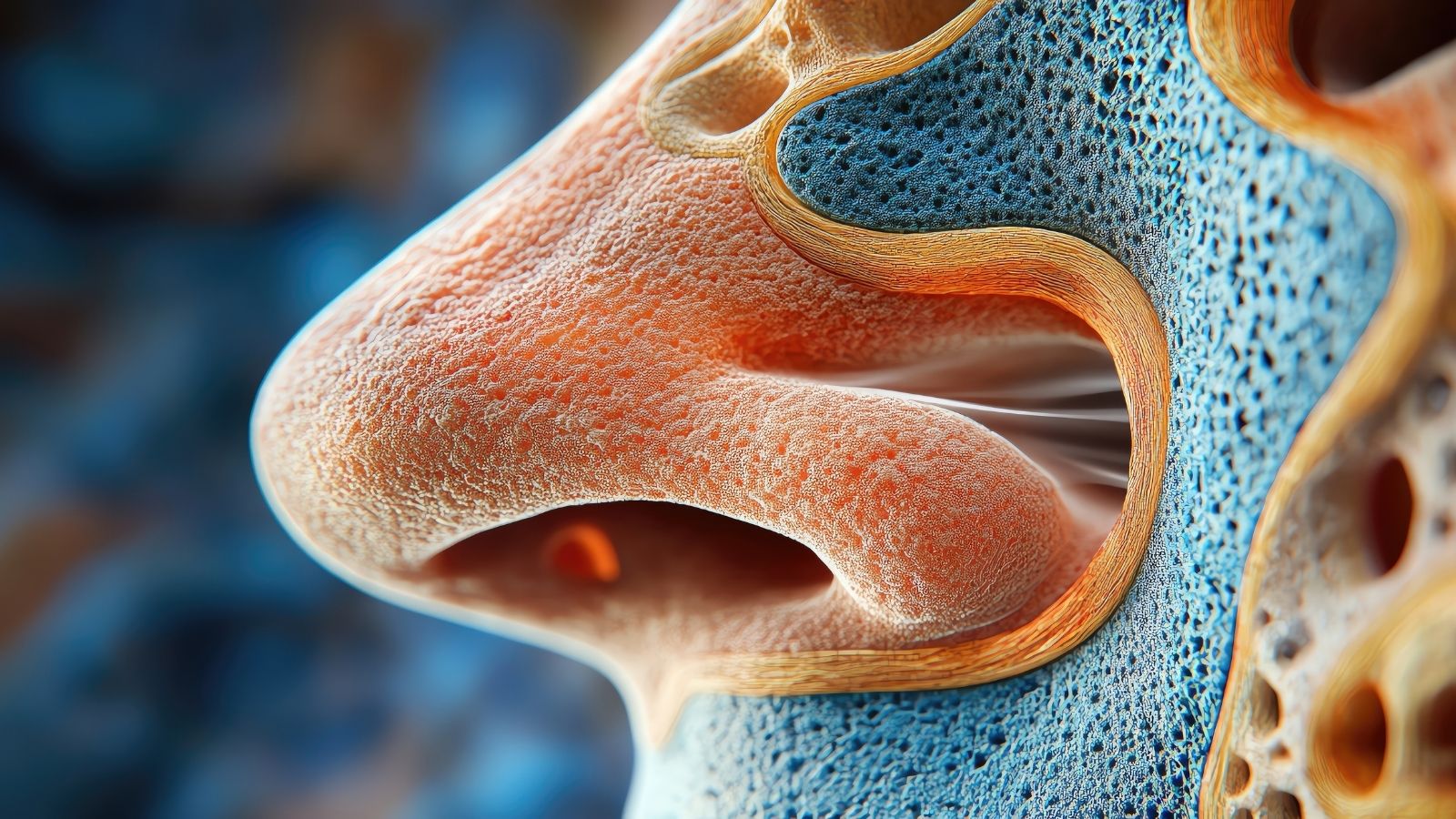
The nasal morphology commonly referred to as an “Armenian nose” is described in medical terminology as a highly projected, aquiline (dorsally humped) nasal structure characterized by a prominent osseocartilaginous dorsal hump. Presenting a dominant profile, this typology is often distinguished by a broad, downward-drooping (ptotic) nasal tip and a thick, porous skin–soft tissue envelope. Beyond being a purely visual trait, this pronounced bony framework is frequently associated with advanced septal deviation that narrows the intranasal airway, making a functional, structurally preservative surgical approach necessary rather than an aesthetic-only correction.
İçindekiler
What are the defining features of the structure commonly known as an “Armenian nose” type?
This nasal structure typically falls into the “complex noses” category from a surgical planning standpoint. The key distinguishing feature is its strong, dominant presence in the center of the face. On profile view, the first striking detail is the marked height along the nasal dorsum. However, the issue is not merely a “humped” appearance; the osseocartilaginous framework is usually robust and volumetric.
Another frequent finding in this nose type is dynamic tip behavior. The nasal tip is generally positioned lower relative to other facial structures. Particularly during speech or smiling, activation of the depressor muscles can pull the tip downward, noticeably increasing tip ptosis. This narrows the nasolabial angle and can make the nose appear longer in profile.
The skin–soft tissue envelope is also one of the most critical determinants of the surgical course. A thick, oily, and porous skin quality is commonly encountered. Thick skin tends to mask the refined cartilaginous shaping achieved intraoperatively, which is why more specialized techniques are required in these cases.
The most common characteristic features of this nose type include:
- Prominent dorsal hump
- Low/ptotic nasal tip
- Thick skin envelope
- Wide alar base
- Strong cartilaginous framework
- Hanging columella
- Broad nasal base
Why are breathing problems frequently seen in this nose type?
What may appear externally as a purely aesthetic “size” concern is often only the visible portion of a deeper functional issue. In individuals with a highly projected, aquiline nasal framework, the likelihood of septal deviation is relatively high. During development, as the external nasal dorsum grows prominently, the internal septal structure may be forced to bend due to limited space and asymmetrical growth patterns.
This deviation can significantly narrow one or both nasal air passages. Many patients report long-standing nasal obstruction that they have normalized over time, even though it can directly affect systemic oxygenation. In addition, compensatory turbinate hypertrophy may occur as the body attempts to balance airflow, resulting in chronic obstruction caused by both structural deviation and soft tissue enlargement.
Common complaints in this patient group include:
- Chronic nasal congestion
- Sleeping with an open mouth
- Significant snoring
- Morning fatigue
- Recurrent throat infections
- Reduced sense of smell
- Exertional shortness of breath
- Postnasal drip
How does a large, aquiline nasal structure affect facial expression?
In facial aesthetics, the central concept is balance. Because the nose sits at the midpoint of the face, any disproportionality can dominate the overall expression. A high dorsal hump combined with a low, drooping tip may make facial features appear harsher and more angular in profile, sometimes creating an impression of being stern or distant.
A low tip position can also contribute to a tired or older appearance. With aging and gravitational effects, the tip may descend further, reinforcing a “droopy” expression. In female patients, this may create a more masculinized look; in male patients, it can intensify an already strong profile and disturb overall harmony.
The goal is not to erase character by producing a standardized “manufactured” nose. In individuals with strong facial features, overly small, excessively curved, or “baby nose” results can appear unnatural. The aim is to soften severity, enhance the eyes, and maintain ethnic and individual identity while achieving a nose that looks inherently compatible with the face.
Key criteria considered to establish facial balance include:
- Fronto-nasal angle
- Nasolabial angle
- Chin projection
- Cheekbone prominence
- Intercanthal distance
- Eyebrow structure
- Overall facial length
Why should modern technologies be preferred over traditional methods?
Rhinoplasty is sometimes perceived as “painful, bruising, and difficult” largely because of older techniques and experiences. Historically, prominent humps were reduced using relatively blunt instruments such as osteotomes, mallets, and rasps. These methods, while effective, often caused greater collateral trauma to surrounding soft tissues, vessels, and mucosa.
As a result, patients commonly experienced extensive bruising (“panda eyes”) and prolonged swelling. Moreover, mallet-and-osteotome maneuvers do not always allow for millimetric control over fracture lines, increasing the risk of postoperative irregularities.
Modern rhinoplasty emphasizes precision and tissue preservation—achieving structural change with minimal trauma. Ultrasonic technologies have significantly improved both surgical control and postoperative recovery quality.
Disadvantages of traditional approaches include:
- Less controlled fractures
- Increased soft tissue trauma
- More bruising and swelling
- Longer recovery
- Coarser shaping
- More postoperative discomfort
- Irregular bony surfaces
What advantages does the Piezo technique offer for humped noses?
For pronounced dorsal humps, Piezo (ultrasonic) rhinoplasty is widely regarded as a contemporary gold standard. Its key advantage is “tissue selectivity.” The ultrasonic tip is designed to act primarily on hard tissue (bone), enabling highly controlled, sculptural cutting and smoothing.
When the device contacts bone, it can shape it with remarkable precision. In contrast, it is far less disruptive to soft tissues, helping reduce inadvertent injury to vessels and mucosa. In cases requiring extensive bony work—such as dense, prominent humps—this selectivity can be especially beneficial. By cutting and contouring rather than forcefully fracturing, overall trauma is reduced.
Consequently, patients often experience less bruising, faster recovery, and a lower risk of palpable dorsal irregularities. Piezo provides the surgeon with enhanced control for reconstructing complex bony anatomy.
Key benefits of Piezo surgery include:
- Millimetric cutting precision
- Soft tissue preservation
- Reduced bruising
- Faster recovery
- Less swelling
- More natural transition lines
- Safer osteotomies
Is dorsal preservation (Preservation Rhinoplasty) possible?
Historically, the standard approach for a dorsal hump was to remove it from the “roof.” However, disrupting the native dorsal framework can sometimes lead to an “open roof deformity,” flattening the dorsum and compromising natural dorsal aesthetic lines. In recent years, surgical philosophy has increasingly shifted from “resection” toward “preservation.”
The core idea in preservation rhinoplasty is to maintain the native dorsal surface, ligaments, and continuity. Instead of taking down the dorsum, cartilage and bone are removed from beneath the dorsum (at the base), allowing the entire dorsal unit to be lowered—much like bringing an elevator down a floor. The “roof” is not broken; the support beneath it is reduced.
In suitable cases of this nose type, preservation techniques can provide particularly natural-looking results. Because the dorsal surface is maintained, the dorsum often feels smoother after healing and looks less “operated.” Preserving key anatomic attachments may also contribute to reduced swelling and a faster recovery trajectory.
When appropriate, preservation techniques may offer:
- A natural dorsal profile
- Faster recovery
- Less swelling
- Natural light reflections
- Functional preservation
- Less long-term sensory change
How are a thick skin envelope and a broad nasal tip refined?
In this typology, the nasal tip is often the most technically demanding component and requires significant experience. The primary reason is the “thick skin” factor. Thick skin can be likened to a heavy blanket: no matter how refined the underlying cartilages are, the envelope can conceal fine details.
Therefore, the guiding principle is not aggressive reduction, but structural reinforcement—i.e., structural rhinoplasty. Excessive cartilage removal in thick-skinned noses can prevent the envelope from contracting properly and may lead to long-term tip droop and loss of definition. Instead, structural cartilage grafts—often harvested from the patient’s septum—are used strategically to strengthen and shape the tip.
These supports function like internal struts that tension the envelope from within. Tip refinement is achieved via specialized suture techniques on the alar cartilages and, when indicated, careful conservative thinning of subcutaneous soft tissue (defatting) without compromising vascularity. The objective is a framework strong enough to resist the weight of the envelope while remaining elegant externally.
Common maneuvers in thick-skinned noses include:
- Structural cartilage grafting
- Strong columellar support
- Conservative subcutaneous thinning
- Cartilage-shaping suture techniques
- Increasing tip projection when needed
- Selective defatting
Is the recovery difficult, and what should patients pay attention to?
With such comprehensive changes, recovery should be discussed realistically. Modern methods (including Piezo) often minimize postoperative pain, but swelling is an expected and natural response. In thick-skinned, strongly structured noses, edema resolution and the emergence of fine details typically take longer than in thin-skinned patients.
The first week usually involves an external splint and taping. When these are removed, a swollen appearance is normal and not indicative of the final result. Dorsal swelling tends to decrease earlier, while gravity can cause swelling to persist longer in the tip region. Full tip refinement and the final definition may take around 12 months, and in thicker skin sometimes up to 18 months. Day-to-day fluctuations—more swelling in the morning, less later in the day—are common.
Close follow-up and adherence to postoperative instructions (such as massage if recommended, edema management strategies, and protection from trauma) improve the long-term quality of the result. Viewing recovery as a marathon rather than a sprint helps set healthy expectations and makes gradual improvements easier to appreciate.
Key points during recovery include:
- Regular nasal massage if advised
- Limiting salt intake
- Maintaining good hydration
- Sleeping with the head elevated
- Sun protection
- Avoiding impact/trauma
- Delaying eyeglasses when instructed
- Attending scheduled follow-ups
Can both aesthetic and functional problems be addressed at the same time?
Yes—this is not only possible, but often the ideal approach. In complex noses, aesthetics and function cannot be separated. The nose is not merely a facial feature; it is the gateway to the respiratory system. Correcting external shape while leaving significant internal obstruction untreated would be incomplete.
With septorhinoplasty, both aspects are addressed in the same session. While the dorsum is shaped and the hump is corrected (often with Piezo), the septal deviation is simultaneously repaired and obstructive bony spurs are removed. Enlarged turbinates can also be reduced using technologies such as radiofrequency, improving airflow.
As a result, patients often notice both an aesthetically harmonious nose and a meaningful improvement in breathing. Sleep quality can improve, morning fatigue may decrease, and overall exercise tolerance can rise. Combining functional and aesthetic gains is one of the most valuable outcomes of modern rhinoplasty.
Combined functional and aesthetic benefits may include:
- Balanced nasal aesthetics
- Easier breathing
- Improved sleep quality
- Increased self-confidence
- Enhanced facial harmony
- Reduced snoring
- Improved sense of smell
- Psychological comfort

Prof. Dr. Murat Songu – Burun Estetiği (Rinoplasti) Uzmanı
Prof. Dr. Murat Songu, 1976 yılında İzmir’de doğmuş, tıp eğitimini Ege Üniversitesi Tıp Fakültesi’nde tamamladıktan sonra Celal Bayar Üniversitesi Kulak Burun Boğaz Anabilim Dalı’nda uzmanlık eğitimini tamamlamıştır. 2005–2006 yıllarında Fransa’nın Bordeaux kentinde Prof. Vincent Darrouzet ve Dr. Guy Lacher gibi rinoloji alanının önde gelen cerrahlarıyla çalışarak rinoplasti, fonksiyonel burun cerrahisi ve kafa tabanı cerrahisi üzerine ileri eğitim almıştır.
Burun estetiğinde doğal görünüm, nefes fonksiyonunun korunması ve yüz estetiği dengesini ön planda tutan Prof. Dr. Songu, açık teknik rinoplasti, piezo (ultrasonik) rinoplasti, revizyon rinoplasti, burun ucu estetiği ve fonksiyonel septorinoplasti operasyonlarında ulusal ve uluslararası düzeyde tanınan bir cerrahtır. Yurt içi ve yurt dışında çok sayıda rinoplasti kongresinde eğitici ve konuşmacı olarak yer almış; yüz estetiği ve burun cerrahisinde modern tekniklerin yaygınlaşmasına öncülük etmiştir.
100’den fazla bilimsel yayını, kitap bölümü yazarlıkları ve 1700’ü aşkın uluslararası atfıyla rinoplasti alanında Türkiye’nin en saygın akademisyenlerinden biri olan Prof. Dr. Murat Songu, doğal, yüzle uyumlu ve fonksiyonel sonuçlar hedefleyen cerrahi yaklaşımıyla hem bilimsel hem estetik başarıları bir araya getirmektedir.