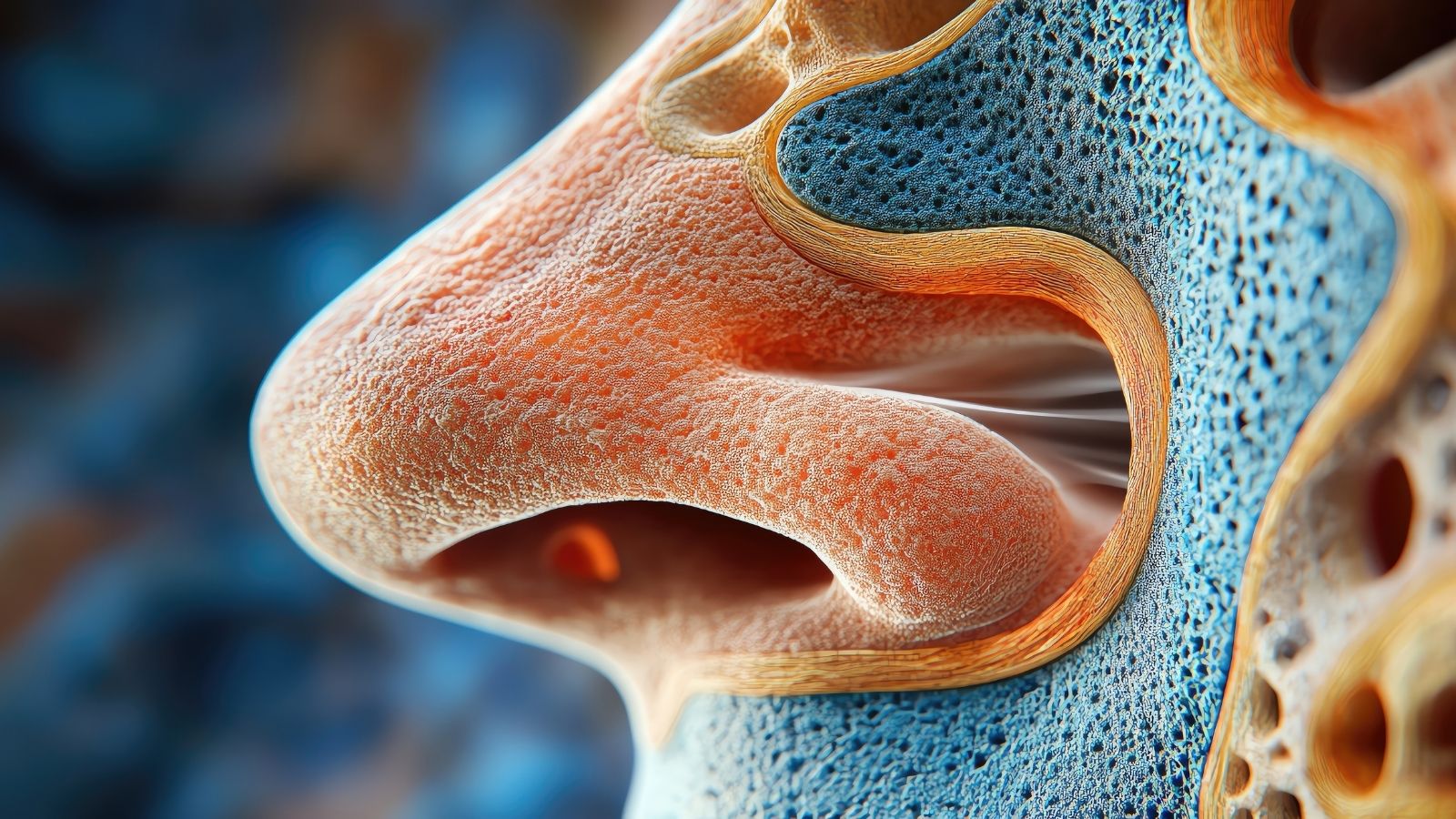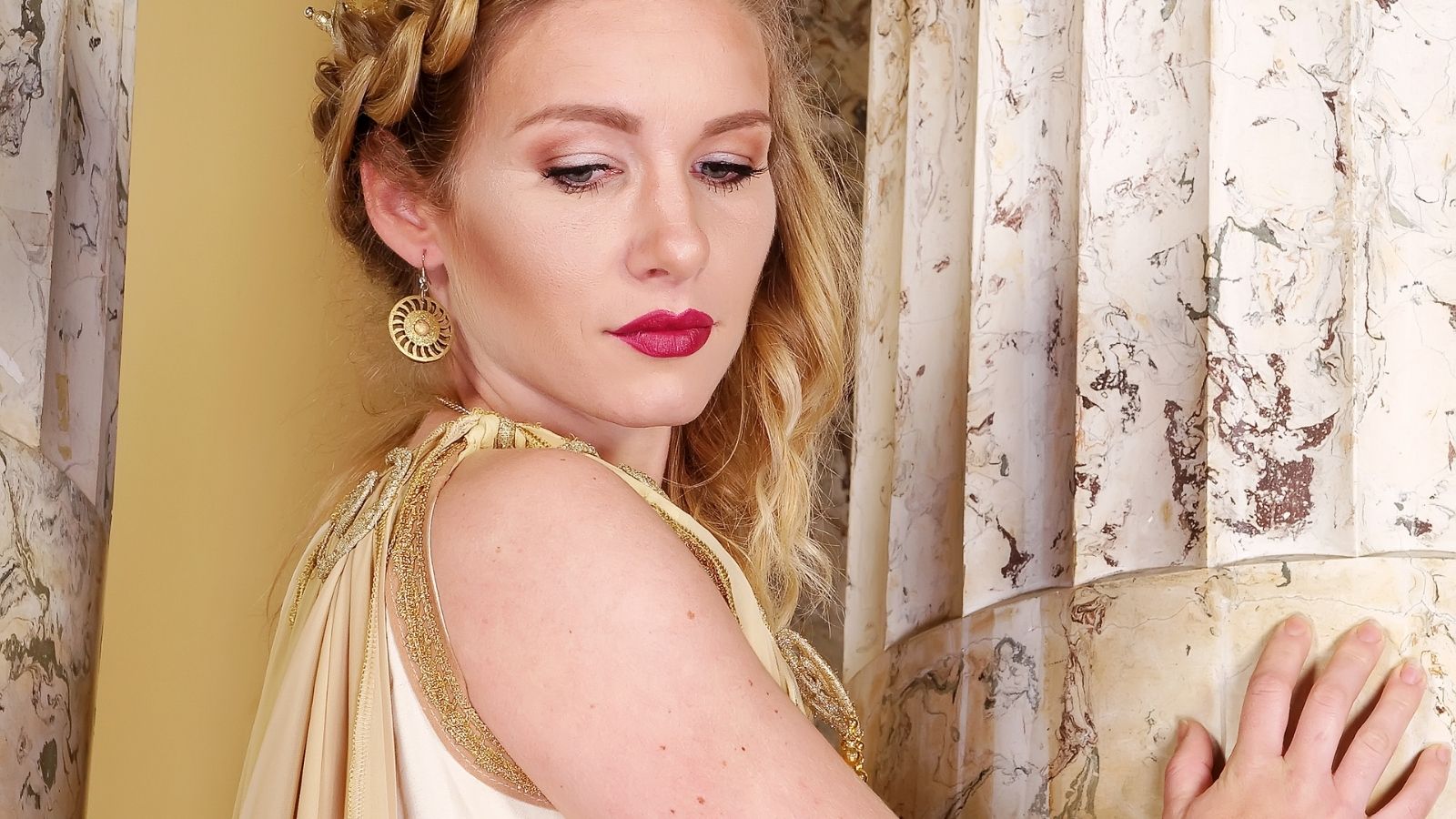
The French nose type is an aesthetic nasal form that creates a dynamic effect in profile, characterized by the nasal tip being positioned upward with a distinct rotation and the nasal dorsum being shaped with an elegant and soft curve. The key feature of this design is that it offers a balanced and sophisticated silhouette that integrates with the natural harmony of the face rather than presenting an artificial upturn. Frequently preferred in modern rhinoplasty applications, this method softens harsh expressions by precisely adjusting the angle between the nose and the lip, and aims to achieve the golden ratio in facial aesthetics by giving the person a more energetic, youthful, and characteristic appearance.
İçindekiler
What is French nose aesthetics, and why is it so popular?
In the world of aesthetics, when we say “French nose,” the first image that comes to mind is an energetic and youthful expression. The most distinctive feature of this nasal structure is that the nasal tip (we call this the “tip” area) looks slightly upward. However, the magic here lies in the dosage of this upturn. Imagine a design where the nasal tip is upturned, your profile comes alive, but someone looking at you from the front does not say, “They’ve had their nose done.” That is the core philosophy of the French nose: effortless beauty.
The main reason this style is popular is the modern air it adds to the face. A low nasal tip can make a person look more tired, older, and sometimes even harsher than they are. The French style, however, brings brightness and freshness to the face by carrying the nasal tip upward at an ideal angle. In this aesthetic understanding, the nasal dorsum does not descend perfectly straight; it contains a very slight, barely perceptible curve. This curve gives the nose that characteristic softness. The aim is not to create an organ that looks like it was drawn with a ruler, but to form a polite and elegant line that fits the natural flow of the face, as if it has been that way since birth.
Is there a risk of the “pig nose” appearance that is patients’ biggest fear?
Let’s be honest: when nasal tip lifting is mentioned, everyone has the same frightening image in mind—a regrettable look in which the nostrils are fully visible from the front, commonly called a “pig nose.” As an aesthetic surgeon, this is one of the concerns I hear most often from my patients, and you are absolutely right to have this concern.
French nose aesthetics is a razor-thin balance game. Our goal is to achieve high rotation, meaning an upturn. However, there is a very fine line between this upturn and going too far (over-rotated). If this boundary is crossed during surgical planning, the aesthetic appearance is disrupted and that unwanted artificial expression emerges. Our aim is not to display the nostrils, but to give the nasal tip an elegant stance.
Managing this risk depends entirely on the surgeon’s experience and artistic vision. We perform millimetric calculations during surgery. While lifting the nasal tip, we continuously control the lip distance and the position of the nasal alae. The French nose requires staying in that safe zone where the nose is “up,” but the nostrils do not “shout” that they are there. When done with the correct techniques, the result is not a pig nose but a highly chic and stylish profile.
How is the ideal upturn angle determined in women and men?
Even though beauty may seem like a relative concept, the foundation of aesthetic surgery lies in mathematics and geometry. What we call an “upturned nose” is not a random lifting procedure; it is an engineering work performed by adhering to specific angles. In French nose aesthetics, the metric we pay the most attention to is the “nasolabial angle,” the corner where the underside of your nose meets your upper lip.
This angle is clearly differentiated by gender. In women, the ideal range we target is as follows:
- 95 degrees
- 100 degrees
- 105 degrees
When this angle is between 95 and 105 degrees in women, the face looks more feminine, more attractive, and younger. However, the moment we go beyond 105 degrees, naturalness is lost and artificiality begins.
In men, the situation is completely different. If you give a man a 100-degree upturn, the facial expression suddenly becomes feminized and the masculine structure is disrupted. That is why we act more conservatively when applying French aesthetics in male patients. The angles we target in men are as follows:
- 90 degrees
- 95 degrees
By staying within this range, we both eliminate the droop at the nasal tip and erase the tired expression, while also preserving the man’s strong facial line.
Why is the balance between nasal projection and rotation important?
Nasal aesthetics is not only lifting the nose upward (rotation). There is also how far the nose projects forward from the face, meaning its length, which we call “projection.” When creating a French nose, we have to think of these two concepts like a scale.
Imagine that we lifted the nasal tip at a perfect angle. But if your nose extends too far forward from the facial plane (think of Pinocchio), this upturn will look very strange on the face. Excessive projection causes the nose to appear overly dominant and large on the face. Conversely, if projection is too little and the nose is very upturned, this time a flat and faint appearance forms in the center of the face.
In French aesthetics, the goal is to lift the nasal tip while also harmonizing the length of the nose with the depth of the face. Even the fullness of your cheeks and the prominence of your cheekbones affect our decision about how far the nose should project. When viewed in profile, there must be perfect harmony between the forehead, nasal tip, and chin tip. Therefore, sometimes it is not enough to only lift the nose; it may also be necessary to bring it slightly back, meaning to reduce projection.
Can this aesthetic be applied to people with a humped or “aquiline nose” structure?
In our geography, the humped nose structure with a downward-pointing tip is called an “aquiline” or “eagle nose.” This nose type is almost the complete opposite of the French nose ideal. The more curved and upturned the French nose is, the more humped and low the aquiline nose is. So, is this transformation possible? Absolutely yes, but this process requires more detailed craftsmanship.
In a patient with an aquiline nose, simply lifting the nasal tip is not enough. First, the excess bone and cartilage on the dorsum must be removed, meaning the hump must be corrected. We call this procedure reduction. The straight or slightly curved dorsum that emerges after the hump is removed forms the foundation of the French nose.
Then comes the truly challenging part: turning that strong, downward-pointing nasal tip upward. This requires rearranging and supporting the cartilages inside the nose. In aquiline noses, the tip ligaments are usually strong and pull downward. Releasing these ligaments and stabilizing the nose in its new position is where the surgeon’s mastery shines. As a result, transitioning from a harsh and dominant expression to a soft and elegant French breeze is possible, and the most transformative and most satisfying outcomes often come from this group.
How should customization be done according to face shape?
We often hear the sentence, “I want exactly the same nose as my friend,” but unfortunately (or fortunately) there is no one-size-fits-all mold in aesthetic surgery. Every face is unique like a fingerprint. Although the French nose philosophy is the same, its application must change according to your face shape.
For example, face types include:
- Oval face
- Heart-shaped face
- Diamond face
- Square face
- Round face
If you have an oval face, you are lucky, because most nose shapes suit you; however, the soft transitions of the French nose make your features even more defined. In a diamond face type, the cheekbones are wide, so the nose should not be too thin; it should have a volume that balances the face, but still be elegant.
If you have a heart-shaped face, your chin is thin and pointed. If we create a very large or very long nose here, your chin will look even smaller. Therefore, we prefer a more delicate, more minimal French nose. In short, when designing the nose, we look not only at the nose but at the geometry of your face. The French nose is like a dress; for it to fit you perfectly, we need to tailor it—narrowing and widening it according to your measurements.
Which surgical techniques are used to achieve this look?
To achieve the characteristic upturn of the French nose, and most importantly to prevent this upturn from dropping over the years, choosing the right technique is of vital importance. The main methods we use as surgeons are as follows:
- Open Rhinoplasty
- Closed Rhinoplasty
- Structural Rhinoplasty
- Preservation Rhinoplasty
The open technique is one of the methods I trust most, especially in cases like the French nose that require serious shape changes and high rotation (lifting). We lift the skin with a small incision from beneath the nose and clearly see the entire internal structure. This gives us the opportunity to work with millimetric precision. By shaping the cartilages and fixing them with solid sutures, we ensure that the upturn is permanent.
The closed technique is known for being scarless. However, in very dramatic changes or in cases where the tip needs very serious support, the field of view may be limited. Still, it yields excellent results in suitable patients. Structural rhinoplasty is more of an approach than a technique; we strengthen the nasal vault with solid cartilages like “building columns.” Thus, no matter how delicate your nose looks, its structure is rock-solid and does not collapse over time.
Is rhinoplasty alone sufficient to ensure facial harmony?
Sometimes our patients focus only on their noses with a magnifying glass. But we surgeons have to look at the whole picture. We call this “profiloplasty.” If your chin is very retruded, even if we create the most beautiful French nose in the world, that nose will look large on your face.
To achieve facial harmony, we may need to touch the neighbors of the nose as well. These complementary procedures are as follows:
- Chin filler or implant
- Forehead filler
- Lip filler
- Cheekbone filler
- Botox applications
For example, in a patient with a retruded chin, instead of reducing the nose, bringing the chin slightly forward balances the profile incredibly. Similarly, in someone with a very flat forehead, the nasal root may look very high; a small filler transition to the forehead softens the transition. The distance between the lip and the nose is very important in the French nose; sometimes a tiny touch to the lip can make the upturned effect of the nose even more beautiful. In other words, our aim is not only to improve the nose but to improve your profile as a whole like a work of art.
Can this result be achieved with non-surgical methods, for example, the French Lift?
With advances in technology, the number of people looking for solutions “without going under the knife” has increased. The “French Lift” is a popular product of this search. Although this method is actually used more for facelifting, it can also be offered as an alternative for lifting the nasal tip.
In this procedure, the nasal tip is suspended upward using special threads. Its advantages are as follows:
- Short procedure time
- Immediate return to social life
- No need for general anesthesia
- Offering a temporary trial option
However, we have to be realistic. Thread-based lifting can never replace surgical rhinoplasty. Why? Because we cannot address the bony structure, a hump, or internal deviations in the nose with threads. We only pull the nasal tip upward. Also, this is not a permanent solution. Depending on the type of thread used, its effect wears off within 1–2 years. Still, it can be a good option for patients who are very afraid of surgery or who wonder, “Would an upturned nose suit me?”
What is the healing process like, and what should patients expect to experience?
French nose aesthetics is a detailed surgery, and it is completely normal for your body to react to it afterward, meaning swelling (edema). You should think of the healing process like a marathon, not a 100-meter sprint.
The first days after surgery may be a bit uncomfortable, but rather than pain, there is a feeling of fullness. In the first week, there is a cast on your nose and silicone splints inside. When these are removed, you say, “Here is my new nose,” but what you see is not actually the final result—it is a swollen version.
The foods that can help you during the healing process are as follows:
- Pineapple
- Parsley
- Oats
- Yogurt
- Apricot
Most of the swelling subsides in the first month. However, it takes time for the nasal tip to gain that delicate refinement, for the skin to fully adhere to the cartilage, and for those “French” details to emerge. In thick-skinned patients, this process can take even longer. Full recovery and the nose taking its final shape takes between 6 months and 1 year. During this period, your nose may be swollen when you wake up in the morning and go down during the day. All of these are a natural part of the process, and being patient is the most important rule for enjoying the result.

Prof. Dr. Murat Songu – Burun Estetiği (Rinoplasti) Uzmanı
Prof. Dr. Murat Songu, 1976 yılında İzmir’de doğmuş, tıp eğitimini Ege Üniversitesi Tıp Fakültesi’nde tamamladıktan sonra Celal Bayar Üniversitesi Kulak Burun Boğaz Anabilim Dalı’nda uzmanlık eğitimini tamamlamıştır. 2005–2006 yıllarında Fransa’nın Bordeaux kentinde Prof. Vincent Darrouzet ve Dr. Guy Lacher gibi rinoloji alanının önde gelen cerrahlarıyla çalışarak rinoplasti, fonksiyonel burun cerrahisi ve kafa tabanı cerrahisi üzerine ileri eğitim almıştır.
Burun estetiğinde doğal görünüm, nefes fonksiyonunun korunması ve yüz estetiği dengesini ön planda tutan Prof. Dr. Songu, açık teknik rinoplasti, piezo (ultrasonik) rinoplasti, revizyon rinoplasti, burun ucu estetiği ve fonksiyonel septorinoplasti operasyonlarında ulusal ve uluslararası düzeyde tanınan bir cerrahtır. Yurt içi ve yurt dışında çok sayıda rinoplasti kongresinde eğitici ve konuşmacı olarak yer almış; yüz estetiği ve burun cerrahisinde modern tekniklerin yaygınlaşmasına öncülük etmiştir.
100’den fazla bilimsel yayını, kitap bölümü yazarlıkları ve 1700’ü aşkın uluslararası atfıyla rinoplasti alanında Türkiye’nin en saygın akademisyenlerinden biri olan Prof. Dr. Murat Songu, doğal, yüzle uyumlu ve fonksiyonel sonuçlar hedefleyen cerrahi yaklaşımıyla hem bilimsel hem estetik başarıları bir araya getirmektedir.