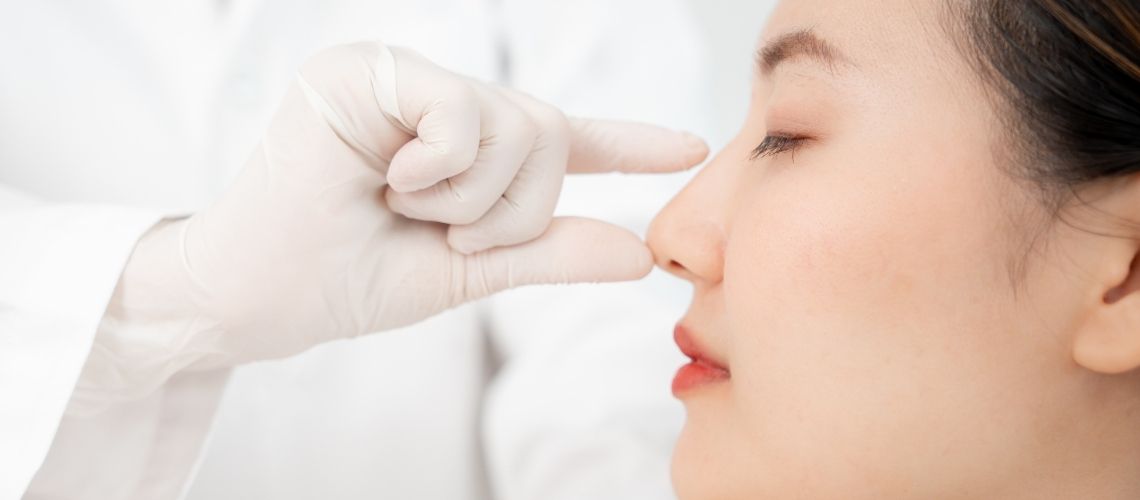
Turkish nose typology, as a reflection of our genetic heritage, is generally defined by a strong bony vault, a pronounced dorsal hump, and a medium-to-thick skin structure. Carrying dominant traces of Middle Eastern and Mediterranean morphology, this nasal form is distinguished by a broad surface area and a low nasal tip that tends to rotate downward with smiling. Classified in the aesthetic surgery literature among challenging noses, this structure requires a reconstructive (structural) rhinoplasty approach that goes beyond standard reduction procedures—one that is harmonious with the overall facial contours, reinforces cartilage support, and preserves functional integrity.
İçindekiler
What Are the Characteristic Features of the Structure Defined as a Turkish Nose?
When the nasal structures of individuals living in Anatolia are examined, we encounter a unique anatomical integrity that is quite different from people of European or Far Eastern origin. Scientific analyses and our daily clinical observations show that the Turkish nose is generally more voluminous, has a wider surface area, and possesses a stronger bony framework. In aesthetic surgical planning, this requires far more than a simple reduction procedure; it requires rebalancing the nose with the face. In this structure—often a blend of Middle Eastern and Mediterranean genetics—the resistance and thickness of the tissues directly influence the surgical strategy.
The most frequently encountered anatomical features in this geography are as follows:
- Pronounced nasal hump
- Thick skin structure
- Low nasal tip
- Wide nasal dorsum
- Oily skin texture
- Weak cartilage support
- Enlarged pores
How Is Naturalness Achieved in a Humped Nose Structure?
A humped nasal structure is perhaps the most common anatomical feature seen in Turkish society. This bump on the nasal dorsum arises from overdevelopment of both bone and cartilage tissue, and when viewed in profile it can make the nose appear much harsher, more dominant, and longer than it actually is. Many of our patients request that this hump be completely eliminated and that a curved line be achieved. However, there is a very fine line to be mindful of here:
In traditional methods, this hump used to be aggressively rasped down or cut away. However, this could sometimes lead to collapse of the nasal roof, an “open roof” deformity, or breathing problems. In modern surgery today, the goal is to keep the “spine” of the nose solid while eliminating the hump. Hump removal requires the sensitivity of a sculptor. If the dorsum is excessively hollowed after hump removal, the overall character of the face can be lost and an artificial expression may appear. Therefore, after the hump is removed, smoothing the nasal dorsum and bringing the side walls closer together becomes highly important. Our target is a natural line that looks as if the person was born with a smooth dorsum—hump-free, but not “obviously done.”
How Does a Droopy Nasal Tip Affect Facial Expression?
In Turkish nose typology, one of the most common complaints is that the nasal tip (the tip region) sits low or moves downward while speaking or smiling. Anatomically, a narrow angle between the nasal tip and the upper lip can make a person look older, more tired, and less energetic than they are. Weak supporting ligaments of the tip or the downward orientation of the tip cartilages are key reasons for this droop.
When the nasal tip is pulled downward as the smile muscles work actively, facial dynamism is lost. Surgically, solving this problem is not achieved simply by cutting and shaping the cartilages; it also requires adding some rotation to the nasal tip. In other words, the tip is ideally rotated slightly upward. This eliminates the tired look and creates a more lively appearance. The most critical point here, however, is to prevent an unnatural appearance where the nostrils become visible from the front due to excessive elevation of the tip.
The negative effects of a low nasal tip on the face are as follows:
- Tired expression
- Aged appearance
- Perception of a longer face
- Harsh demeanor
- Upper-lip concealment
Why Is Thick-Skinned Nose Surgery More Difficult?
One of the most challenging tests in rhinoplasty surgery is undoubtedly a thick skin structure. In Turkish society—especially in men and in patients of southeastern origin—skin thickness ranges from moderate to advanced. We can compare thick skin to a thick quilt draped over a delicate framework. As surgeons, no matter how millimetric and refined our work is on the underlying cartilage and bone, when thick skin covers it, those details become harder to see from the outside.
In a thin-skinned patient, even the smallest change is immediately noticeable, whereas in thick-skinned patients, making those details visible requires special techniques and a serious skeletal support. To carry the weight of thick skin and prevent the nose from collapsing over time or developing a “bird beak” appearance, the internal vault must be very strong. Weak cartilages cannot withstand the pressure and weight of thick skin and may be compressed over time.
For this reason, in thick-skinned noses, “restructuring” and “supporting” take priority over simple “reduction.” Support pieces (grafts) obtained from the patient’s own cartilage are used to refine the nasal tip and make it appear more delicate.
The main challenges we encounter in thick-skinned noses are as follows:
- Prolonged swelling period
- Loss of detail
- Risk of scar tissue
- Skeletal weakness
- Resistance to shaping
How Are Breathing Problems Addressed in Aesthetic Surgery?
Aesthetic nasal surgery and functional nasal surgery cannot be considered separately; they are integrated like flesh and nail. The best-looking nose is the one that breathes the best. In Turkish society, a large proportion of patients who present with aesthetic concerns also have significant deviations in the “septum” (the central partition) and enlargements of the nasal turbinates (conchae). These problems disrupt sleep quality, cause snoring, lead to waking up tired, and significantly reduce exercise capacity in daily life.
In combined surgery that we call septorhinoplasty, both the external appearance is corrected and the airway is opened in the same session. The curved cartilages inside the nose are corrected to widen the air corridors. A major advantage here is that the curved cartilage pieces that obstruct breathing are not simply discarded. These cartilages are used as building blocks in the aesthetic reconstruction—especially for supporting the nasal tip or correcting the dorsum. In other words, the excess tissue that disrupts function becomes a cornerstone of the aesthetic architecture.
The functional issues we frequently address are as follows:
- Septal deviation
- Turbinate enlargement
- Nasal valve narrowing
- Chronic sinusitis
- Presence of polyps
How Is Identity Preserved with the Ethnic Rhinoplasty Approach?
In recent years, the most important value rising in the world of aesthetic surgery and in our country is the concept of “Ethnic Rhinoplasty.” The old, one-size-fits-all “Western” nose model—overly upturned, highly curved, and tiny—has been abandoned. Every society has different facial lines, bone structure, chin projection, and eye structure. In planning for a Turkish nose, erasing a person’s ethnic identity and facial character and “installing” an artificial nose that does not belong to them does not create aesthetic success; it creates disharmony.
According to the ethnic rhinoplasty principle, while correcting a patient’s nose, the harmony with the other facial organs must be considered. For example, creating a Scandinavian-style nose that does not suit the face of a dark-skinned individual with strong and characteristic facial lines disrupts facial balance and distances the person from naturalness. The goal is to help the patient achieve “a better version of their own nose.” This means a result that respects the genetic heritage of the face—culturally compatible, yet aesthetically refined and freed from coarse lines.
What Are the Goals in Female and Male Rhinoplasty?
Biological sex is one of the most fundamental factors that determines the surgical route in rhinoplasty. Female and male facial anatomies differ, and therefore ideal nose definitions, angles, and proportions also change substantially. Just as it is wrong to create a feminine nose for a man, it is equally unaesthetic to create a masculine and harsh nose for a woman.
In women, the aesthetic goal is a form with more delicate transitions, where the nasal dorsum can be slightly curved and the nasal tip angle is in the 95–100 degree range—meaning the tip is subtly upturned. These features create a softer, more attractive, and more feminine expression. Tip refinement and delicacy are desired traits in the female face.
In men, the situation is the opposite and requires greater caution. In the male nose, it is essential to preserve a straight, masculine dorsum rather than a curve. The nasal tip angle should be narrower—around 90 degrees—and the distance between the nose and the upper lip should be maintained. Excessive reduction of the male nose, hollowing of the dorsum, or excessive elevation of the tip can soften the facial expression and lead to an undesired feminine appearance.
In male patients, the situations we particularly avoid are as follows:
- Excessive curvature
- Upturned tip
- Narrow nasal dorsum
- Small nostrils
- Soft transitions
Why Is Open Technique Surgery Preferred More Often?
In choosing a surgical technique, “Open” and “Closed” rhinoplasty approaches are frequently asked about by our patients. In complex cases such as the Turkish nose—where there is a hump, a low tip, and significant structural change is needed—the “Open Rhinoplasty” technique generally provides us, as surgeons, with a wider field of view and greater maneuverability.
In the open technique, through a millimetric incision made on the area between the nostrils (the columella), the nasal skin is lifted so that all anatomy—bone and cartilage structures—becomes visible to the naked eye. This offers a major advantage for correcting asymmetries, suturing the cartilages precisely, and placing grafts with millimetric accuracy. There is no need to worry about scarring; because when this incision is closed with the correct technique, it becomes almost indistinct over time and is located in one of the best-healing regions of the body. Although the closed technique may promise less swelling, the level of control provided by the open technique is often indispensable for the comprehensive reconstruction required by the Turkish nose.
Which Problems Are Addressed with Nasal Tip Surgery (Tip Plasty)?
The nasal tip is the most complex, most mobile, and most aesthetically noticeable region of the nose. The procedures we refer to as “Tip Plasty” include fine adjustments and shaping focused only on the tip, without touching the bony structure. The “Bulbous Tip” problem—where the nasal tip is round, fleshy, and wide—commonly seen in the Turkish nose can be corrected with special suture techniques and cartilage trimming.
Here, while the excessive parts of the cartilage are removed in millimetric amounts, preserving the cartilage’s strength is vital. In addition, excessively long nasal tips described as a “Pinocchio nose,” which project far ahead of the facial plane, are set back to become more proportional with the face. To lift low nasal tips, invisible cartilage supports are placed into the columella, the structural pole of the nose, preventing the tip from succumbing to gravity and drooping again over time.
The main procedures we apply in nasal tip surgery are as follows:
- Increasing rotation
- Reducing projection
- Refinement procedure
- Achieving symmetry
- Placing support grafts
In Which Situations Do Revision Surgeries Become Necessary?
“Revision Rhinoplasty,” performed for patients who have previously undergone rhinoplasty but are not satisfied with aesthetic or functional outcomes, is a much more technical, complex, and challenging process than the first surgery. This is because the natural cartilage reserves inside the nose have often been used or damaged in the first operation, tissue planes have adhered, and blood circulation has changed.
The biggest problem we face in revision surgery is not having enough cartilage available to rebuild the nose. If the nose has lost support and collapsed due to excessive cartilage removal in the first surgery, if an artificial appearance like being “clipped with a peg” has formed, or if the tip has completely drooped, cartilage transfer from other parts of the body may be required. Most commonly, the patient’s own rib cartilage or ear cartilage is the most reliable material for this repair. These cartilages are used as structural support to restore the nose to a natural form and open the airways.
The main reasons requiring revision are as follows:
- Nasal dorsum collapse
- Breathing difficulty
- Nasal tip drooping
- Excessive upturn
- Asymmetric appearance
What Should Patients Expect During the Healing Process?
The healing period after a successful surgery is at least as important as the operation itself and is a journey that requires patience. Especially in the Turkish nose typology—with thick skin and a strong bony structure—it takes time for swelling to subside and for the nose to take its full shape. The nose seen immediately after cast removal is not the final result; it is only a preview.
Although the major swelling in the first weeks decreases quickly, the skin settling onto the bone and cartilage framework, the skin thinning, and the fine details becoming visible generally take an average of 6 months to 1 year. In thick-skinned patients, this period can sometimes extend to 1.5–2 years. During this time, protecting the nose from impacts, performing the massages recommended by the doctor regularly, and not neglecting saline rinses are factors that ensure the surgical success remains long-lasting. Viewing the healing process as a marathon is the healthiest approach to fully enjoying the final result.
The points to be mindful of during the healing period are as follows:
- Sleeping with the head elevated
- Sun protection
- Not wearing glasses
- Avoiding impacts
- Performing regular massage

Prof. Dr. Murat Songu – Burun Estetiği (Rinoplasti) Uzmanı
Prof. Dr. Murat Songu, 1976 yılında İzmir’de doğmuş, tıp eğitimini Ege Üniversitesi Tıp Fakültesi’nde tamamladıktan sonra Celal Bayar Üniversitesi Kulak Burun Boğaz Anabilim Dalı’nda uzmanlık eğitimini tamamlamıştır. 2005–2006 yıllarında Fransa’nın Bordeaux kentinde Prof. Vincent Darrouzet ve Dr. Guy Lacher gibi rinoloji alanının önde gelen cerrahlarıyla çalışarak rinoplasti, fonksiyonel burun cerrahisi ve kafa tabanı cerrahisi üzerine ileri eğitim almıştır.
Burun estetiğinde doğal görünüm, nefes fonksiyonunun korunması ve yüz estetiği dengesini ön planda tutan Prof. Dr. Songu, açık teknik rinoplasti, piezo (ultrasonik) rinoplasti, revizyon rinoplasti, burun ucu estetiği ve fonksiyonel septorinoplasti operasyonlarında ulusal ve uluslararası düzeyde tanınan bir cerrahtır. Yurt içi ve yurt dışında çok sayıda rinoplasti kongresinde eğitici ve konuşmacı olarak yer almış; yüz estetiği ve burun cerrahisinde modern tekniklerin yaygınlaşmasına öncülük etmiştir.
100’den fazla bilimsel yayını, kitap bölümü yazarlıkları ve 1700’ü aşkın uluslararası atfıyla rinoplasti alanında Türkiye’nin en saygın akademisyenlerinden biri olan Prof. Dr. Murat Songu, doğal, yüzle uyumlu ve fonksiyonel sonuçlar hedefleyen cerrahi yaklaşımıyla hem bilimsel hem estetik başarıları bir araya getirmektedir.