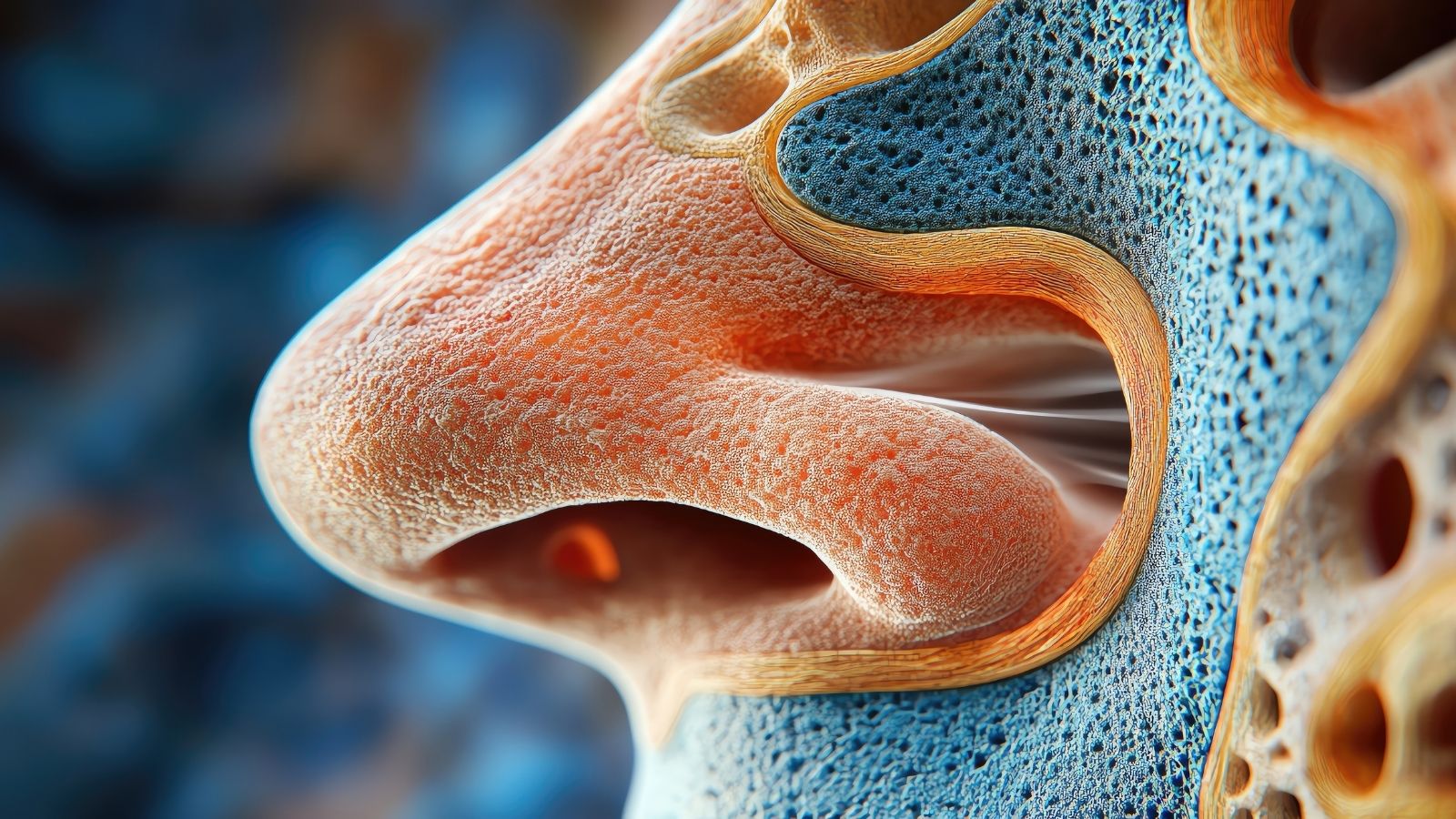
Brazilian nose aesthetics is a surgical design model characterized by a nasal tip that projects forward prominently, a sharp separation between the dorsum and the tip, and a higher degree of rotation that creates an upturned appearance. This specific nasal configuration aims to produce a distinctive profile that harmonizes with the face’s natural contours and displays clear light–shadow transitions. Often associated with a “doll-like” (button nose) look, this approach widens the angle between the nose and upper lip, giving the face a younger, more vibrant, and dynamic expression. The primary goal is not merely reduction, but achieving structural, crisp elegance that strengthens facial symmetry.
İçindekiler
What Is Brazilian Nose Aesthetics and What Are Its Key Features?
When people refer to a “Brazilian nose,” they usually picture an upturned, stylish, highly aesthetic nasal shape. Clinically, however, this concept is far more technical and detailed. The core of this aesthetic philosophy is not soft, vague transitions on the nasal surface, but rather clean and well-defined lines. The sharpness of the descent from the nasal dorsum to the tip adds a characteristic, confident definition to the overall facial expression.
One of the most distinctive hallmarks of this style is the milimetric transition point called the “supratip break,” where the dorsum ends and the nasal tip begins. This subtle break allows the tip to stand out clearly. The tip itself projects forward noticeably from the facial plane—this is what we call “projection.” Higher projection is one of the main elements that makes the nose appear slimmer and more refined. In addition, the tip is gently rotated upward (high rotation). This increases the nasolabial angle (between the nose and upper lip), contributing to a younger, brighter, and more energetic look.
In older rhinoplasty concepts, simply removing a hump and straightening the bridge was sometimes considered enough. In Brazilian-style design, however, the objective is to create “diamond” or “pyramidal” light reflections over the tip—an optical signature of precise craftsmanship. For that reason, this is not just a reduction procedure; it is a structural re-engineering of the cartilage framework.
Is Brazilian Nose Aesthetics Suitable for Every Face Type?
As with any aesthetic intervention, the principle of individualized design is essential. The bold, elevated, “confident” look of the Brazilian style will not harmonize equally well with every facial structure. At this point, overall facial geometry becomes decisive. In practice, we do not design a nose in isolation—we assess the chin, cheekbones, and forehead as well, because the nose functions as a central balancing element.
Brazilian-style aesthetics often yields excellent results in faces described as “heart-shaped” or “inverted triangle,” where the lower facial third and chin line are naturally delicate. In these faces, refining and slightly lifting the tip complements the inherent softness of the lower face. In broader, squarer, or more angular faces, however, excessive narrowing or over-rotation can create imbalance. In such cases, we preserve the style’s clean lines but keep nasal volume proportionate to facial width.
Key factors that determine suitability include:
- Chin projection and position
- Cheekbone width
- Forehead proportion
- Lip structure
- Skin thickness
- Intercanthal distance (eye spacing)
If the chin is retrusive, making the nose too small or too curved can emphasize that retrusion. In these scenarios, subtle chin augmentation (filler or other small balancing interventions) may be the better route to a harmonious profile rather than aggressively downsizing the nose.
How Is Ideal Tip Rotation and Upturn Calculated?
The “signature” of Brazilian design is tip upturn, medically referred to as “rotation.” But this is never a random angle. If pushed too far, it may create the undesired appearance where nostrils are clearly visible from the front—commonly described as a “piggy nose.” If rotation is insufficient, the face loses the intended youthful, dynamic expression and may appear tired.
This is where proportional planning and sex-based aesthetics matter. In many female noses, a slightly wider nasolabial angle is generally considered aesthetically acceptable and often desirable. A commonly referenced range is about 95–105 degrees for women, and Brazilian-style results often aim closer to the upper part of that range—upturned, yet still within aesthetic limits so the nostrils do not dominate the frontal view.
In male patients, the strategy changes. Excessive upturn can soften masculine facial cues and create an overly feminized appearance. Therefore, male targets are typically more conservative, often around 90–95 degrees. In men, Brazilian aesthetics is usually translated as “sharp lines + strong projection,” while “high rotation” is deliberately moderated.
Which Surgical Techniques Are Preferred: Open or Closed?
Brazilian-style aesthetics requires high-precision work on the nasal tip and cartilage. That level of detail demands strong control over the framework. Different approaches can be used, and the choice depends on anatomy and the extent of change required.
- Open Rhinoplasty:
In cases where the tip needs substantial reshaping, refining, and upward rotation, the open approach provides maximum control. Through a small incision at the columella, the skin is elevated, allowing direct visualization of the entire skeletal framework. This enables millimetric trimming, advanced suture shaping, and precise placement of supportive grafts to prevent long-term tip drop. It is especially valuable in tip asymmetry or revision cases.
- Closed Rhinoplasty:
Often marketed as “scarless,” closed rhinoplasty keeps all incisions inside the nostrils. Recovery can be slightly faster because tip support structures and vascular connections may be less disrupted. However, it provides a more limited view, making experience and tactile precision paramount. If a patient does not require radical tip restructuring, Brazilian-style transitions and a refined silhouette can still be achieved with a closed approach in skilled hands.
- Preservation Rhinoplasty (Dorsal Preservation):
This tissue-respecting concept preserves the natural dorsal surface rather than cutting down the bridge. Instead, tissue is removed from lower segments so the dorsum is lowered as a unit (often via “let-down” principles). For Brazilian aesthetics, this can be a strong option when a smooth, natural-looking dorsum with clean light reflections is a priority.
Who Is a Candidate for Tip-Only Surgery (Tip Plasty)?
Some patients have minimal concern about the dorsum and mainly dislike a drooping or broad tip. In such cases, a full rhinoplasty may not be necessary. Tip plasty focuses solely on the cartilages and soft tissues of the tip without touching the nasal bones—no fractures, no major bridge work.
Tip plasty can be ideal for patients seeking a Brazilian-style tip effect (more projection, refinement, and lift) when the bridge is already acceptable. It is typically shorter, with minimal bruising and swelling, and many patients return to social activities quickly.
Common candidate features include:
- Drooping nasal tip
- Wide or bulbous tip
- Nostril asymmetry
- Long tip segment
- Tip droop that worsens when smiling
If there is a significant dorsal hump or major deviation, tip-only correction may not produce a balanced overall result, and a full rhinoplasty plan is usually more appropriate.
Is Brazilian Nose Aesthetics Possible in Thick-Skinned Patients?
The greatest challenge in achieving a Brazilian-style “crisp” look is often the skin—more than bone or cartilage. This aesthetic relies on visible definition: sharp lines, a clear supratip break, and a refined tip. Thick, sebaceous skin acts like a heavy blanket that blunts these details.
In thick-skinned noses, achieving an extremely sharp, “bony” appearance is anatomically more difficult. Even with refinement, the tip may retain some roundness. For this reason, planning changes: the cartilage framework must be built stronger and more prominent to support and tension the skin. In select cases, postoperative adjuncts may help the skin settle and appear less bulky. Conversely, in very thin-skinned noses, tiny irregularities may show easily—so camouflage techniques and ultra-smooth surface work become crucial.
How Does the Preoperative Design Process Work?
A strong result begins long before surgery. The most important step is ensuring the patient and surgeon share the same aesthetic language. Words like “natural” or “upturned” mean different things to different people, so visual planning is essential.
Professional photographs and simulation tools are commonly used to outline a realistic design on the patient’s own face. Together, the planned level of rotation, projection, and dorsum contour can be discussed. This stage also clarifies feasibility: rather than copying someone else’s nose, the healthier approach is adapting the style to the patient’s anatomy and proportions.
Core design criteria include:
- Facial symmetry
- Nose–lip distance
- Forehead–nose transition angle
- Chin projection
- Alar base width
Is Breathing Function Ever Sacrificed for Aesthetics?
No. A nose that cannot breathe well is not a successful outcome, regardless of how attractive it looks. Aesthetic and function are not competing goals—they should reinforce each other.
In Brazilian-style shaping, narrowing and rotating the tip must be performed while protecting the nasal valve region (the narrowest airflow segment). Over-narrowing can cause chronic obstruction and a “pinched” appearance. In a functional–aesthetic approach, septal deviations are corrected if present, enlarged turbinates are treated when needed, and structural tip support grafts often improve airflow by preventing sidewall collapse.
What Is Recovery Like and What Does Postoperative Care Involve?
Modern atraumatic techniques have made recovery far more manageable than in the past. Pain is usually mild; early discomfort is more commonly related to congestion and swelling. Tip-only surgery typically produces minimal bruising since the bones are not manipulated. Full rhinoplasty may cause light bruising and swelling around the eyes, often settling enough within about a week for most people to resume social activity.
Common postoperative recommendations include:
- Cold compresses as directed
- Sleeping with head elevation
- Reducing salt intake
- Using prescribed nasal sprays
- Sun protection
- Avoiding impact and pressure on the nose
The cast and any internal silicone supports are often removed around one week. The early shape is visible at that point, but it is not the final result—edema continues to resolve over months, and fine definition can take longer, especially in thick-skinned patients.
How Stable Are Long-Term Results in Brazilian Nose Aesthetics?
Long-term success is determined by structure. Gravity acts continuously on the nasal tip, and without adequate support, “tip drop” can occur over time—diminishing the elevated, lively look.
Brazilian-style designs typically rely on structural cartilage support (such as strut grafts and extension-style supports) to maintain the chosen rotation and projection. These supports function like internal pillars that keep the “roof” stable. With proper structural planning, results can remain stable for years, and the natural age-related downward drift of the tip may be reduced as well. Ultimately, the longevity of the outcome depends less on the external contour and more on the invisible engineering built inside the nose.

Prof. Dr. Murat Songu – Burun Estetiği (Rinoplasti) Uzmanı
Prof. Dr. Murat Songu, 1976 yılında İzmir’de doğmuş, tıp eğitimini Ege Üniversitesi Tıp Fakültesi’nde tamamladıktan sonra Celal Bayar Üniversitesi Kulak Burun Boğaz Anabilim Dalı’nda uzmanlık eğitimini tamamlamıştır. 2005–2006 yıllarında Fransa’nın Bordeaux kentinde Prof. Vincent Darrouzet ve Dr. Guy Lacher gibi rinoloji alanının önde gelen cerrahlarıyla çalışarak rinoplasti, fonksiyonel burun cerrahisi ve kafa tabanı cerrahisi üzerine ileri eğitim almıştır.
Burun estetiğinde doğal görünüm, nefes fonksiyonunun korunması ve yüz estetiği dengesini ön planda tutan Prof. Dr. Songu, açık teknik rinoplasti, piezo (ultrasonik) rinoplasti, revizyon rinoplasti, burun ucu estetiği ve fonksiyonel septorinoplasti operasyonlarında ulusal ve uluslararası düzeyde tanınan bir cerrahtır. Yurt içi ve yurt dışında çok sayıda rinoplasti kongresinde eğitici ve konuşmacı olarak yer almış; yüz estetiği ve burun cerrahisinde modern tekniklerin yaygınlaşmasına öncülük etmiştir.
100’den fazla bilimsel yayını, kitap bölümü yazarlıkları ve 1700’ü aşkın uluslararası atfıyla rinoplasti alanında Türkiye’nin en saygın akademisyenlerinden biri olan Prof. Dr. Murat Songu, doğal, yüzle uyumlu ve fonksiyonel sonuçlar hedefleyen cerrahi yaklaşımıyla hem bilimsel hem estetik başarıları bir araya getirmektedir.