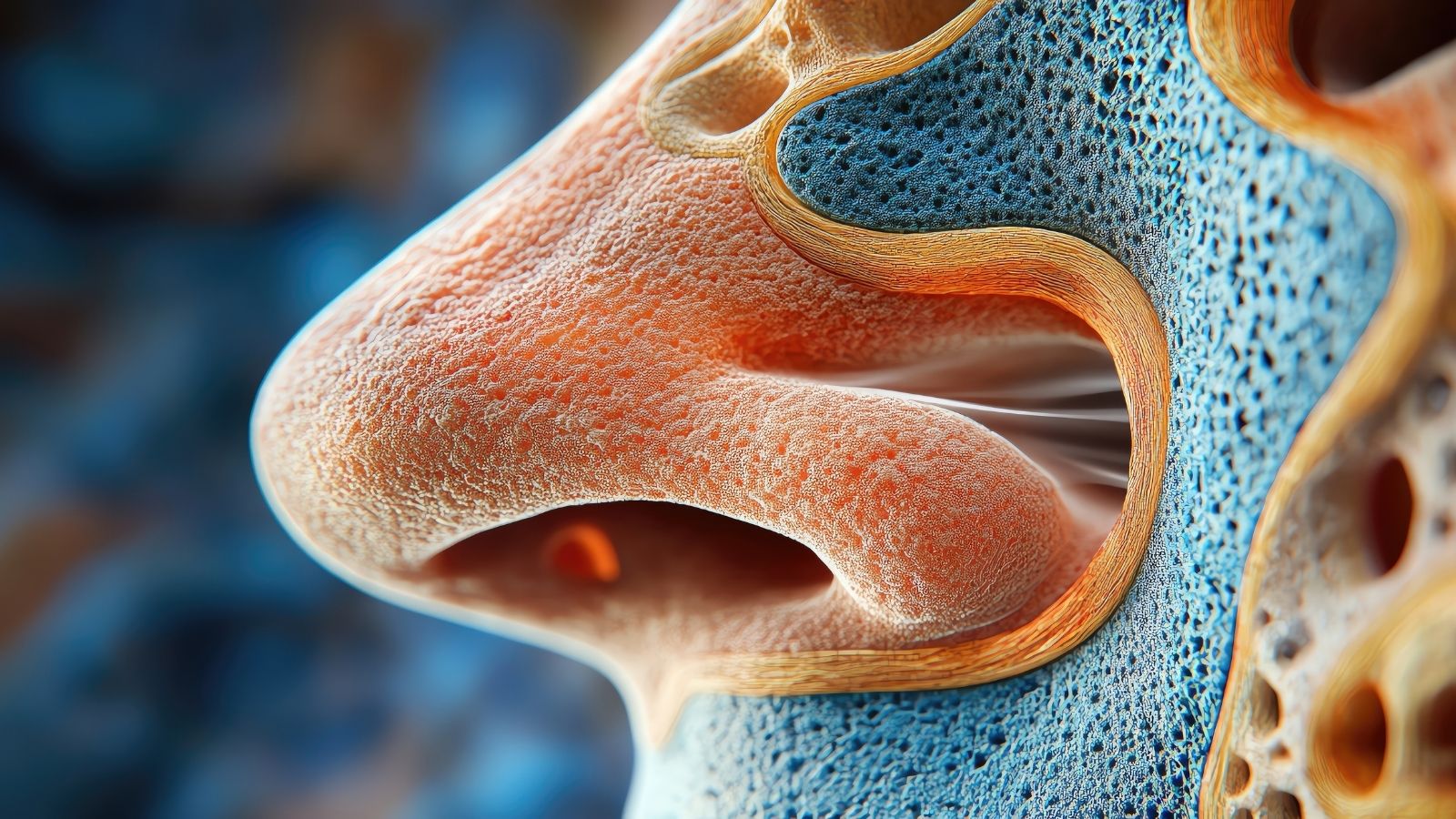
The Japanese nose type is a distinctive structure within the broader Asian morphological group, anatomically characterized by a flat nasal root, a low nasal dorsum with minimal elevation from the facial plane, and a rounded nasal tip. In this form, the cartilages that create the structural framework are typically thin and weak, while the overlying skin envelope is relatively thick and resistant. The combination of insufficient skeletal support and thick skin reduces tip projection, producing a wider, less defined appearance, and can make the alar base appear broader in proportion to the face. In the aesthetic surgery literature, this anatomical pattern is described as typical Asian nose characteristics and generally requires support- and definition-focused structural approaches rather than standard reduction techniques.
İçindekiler
What are the Japanese nose type and its basic anatomical features?
In Japanese and, more broadly, East Asian patients, the nasal anatomy we encounter reflects a highly characteristic genetic pattern. Understanding these features is the first step to recognizing why a standard “reductive” rhinoplasty concept often fails to deliver optimal results in this group. Unlike the high, hump-bearing, drooping-tip noses frequently seen in Caucasian morphology, this is an entirely different “architecture.”
The most notable feature is the low position of the nasal dorsum relative to the facial profile. The radix—the area between the eyes where the nose meets the forehead—is typically flat. This can reduce the perception of midface depth and may create the illusion that the eyes are farther apart. The nasal bones are often shorter and wider, which prevents the nose from projecting prominently from the facial surface.
The nasal tip is the most critical component of this anatomical configuration. In the Japanese nose, the tip cartilages (alar cartilages) are structurally weak, thin, and soft. This delicate framework is not strong enough to carry the thick skin envelope above it. As a result, tip projection (forward extension) is insufficient, and the tip tends to look round or even globular. The nostrils often have a more horizontal or slightly oblique orientation. When all these elements come together, it becomes clear that surgical planning must be based on “adding/building” rather than “removing.”
Why is skin thickness decisive in Asian nasal anatomy?
One of the most important factors influencing surgical success and the final outcome in this nose type is the skin envelope. The framework matters, but so does the covering. In Japanese patients, the skin is often thick, and the subcutaneous fibro-fatty layer is relatively abundant.
The challenges created by thick skin in the surgical process include:
- Masking of nasal tip definition
- Increased weight on the framework
- Prolonged swelling
- Tendency toward scar tissue formation
- Slower recovery dynamics
Fine, millimetric cartilage refinements can become invisible under thick skin. This can be compared to placing a small object under a thick winter blanket—it is difficult to perceive sharp contours through the blanket. Therefore, to overcome the masking effect of thick skin, the surgeon often needs to create a more pronounced and stronger underlying framework than usual. Thick skin is also heavier; weak cartilages may not tolerate this load and can collapse over time. For this reason, the skin quality directly dictates the surgical strategy.
Why is the concept of “augmentation” important in the surgical approach?
For many years, classical rhinoplasty was built around reducing dorsal humps and making large noses smaller. However, applying that reduction-based logic to a patient with Japanese nasal characteristics can lead to an aesthetic failure—because the core issue here is not excess tissue, but structural deficiency.
Since the existing nose already has minimal elevation from the facial plane, removing bone or cartilage can make the nose look even flatter and disrupt facial expression. This is where Augmentation Rhinoplasty becomes essential. Augmentation, by definition, means increasing or elevating. The primary philosophy is not to shrink the nose, but to add volume, raise the dorsum, and advance the tip projection.
This approach is similar to engineering a bridge: if the existing structure cannot carry the load or lacks the desired form, a new framework is built using strong materials (grafts). In this way, the nose gains a more harmonious, stronger, and aesthetically refined position in relation to the rest of the face. The goal is to achieve a more defined and elegant nose that respects cultural identity and fits the individual’s facial proportions.
Which materials are used to elevate the nasal dorsum?
Raising the nasal dorsum is an indispensable part of Japanese rhinoplasty. To bring a flat radix and dorsum to an ideal height, surgeons have multiple material options. Historically, silicone implants were commonly used for this purpose. However, in contemporary practice, the patient’s own tissues (autologous grafts) are considered the gold standard for long-term safety and reliability.
Materials used for dorsal augmentation include:
- Costal (rib) cartilage
- Auricular (ear) cartilage
- Septal cartilage
- Temporal fascia
- Diced cartilage
Synthetic implants such as silicone or Gore-Tex may appear practical, but they remain “foreign bodies” to the immune system. Over the years, they can carry risks such as infection, implant migration, capsular contracture, or visibility due to skin thinning. In Asian patients, when tip skin tension is increased, there can even be a risk of extrusion at the tip. For these reasons, cartilage harvested from the patient’s own rib or septum is often preferred, as it is fully biocompatible and has a minimal infection risk.
Why is rib cartilage frequently preferred?
Patients often wonder why cartilage might need to be harvested from the chest for a nose procedure. In standard rhinoplasty, septal cartilage is typically sufficient. However, Japanese nasal anatomy is different: septal cartilage is often small and weak, mirroring the external framework.
Because the procedure is essentially “construction,” a large and strong supply of building material is required. To raise the dorsum by 3–4 millimeters and significantly increase tip projection, the necessary cartilage volume is often impossible to obtain from the septum alone. Ear cartilage is naturally curved and relatively soft; it is not ideal for creating a straight dorsal line or a rigid, upright supporting column for the tip.
Costal cartilage becomes the most powerful resource in this context. It can be harvested in substantial quantity, is relatively straight, and is highly resistant—capable of withstanding the pressure of thick skin without significant resorption. In experienced hands, rib harvest is safe and comfortable. It is typically obtained through a small incision concealed in the inframammary crease, and once healed, the scar usually becomes barely noticeable. This provides a strong foundation that can maintain shape for years.
What is the “strut graft” method in nasal tip surgery?
The most challenging component of Japanese nasal morphology is the tip. As noted, the tip cartilages are weak while the skin is thick. This combination makes it difficult to sculpt the tip using sutures alone. If the surgeon relies only on suture shaping of the existing cartilages, the weight of thick skin can overwhelm the result, causing the tip to droop or broaden over time.
To address this, structural supports known as Strut Grafts are used. This can be compared to the central pole of a tent: if the tent fabric (skin) is heavy, a strong pole (graft) is required to hold it up. The surgeon prepares a sturdy cartilage segment and places it inside the tip area like a column. This column both lifts the tip and pushes it forward.
With this structural support:
- Tip projection increases
- The alar sidewalls can appear more supported
- Excess roundness at the tip is reduced
- A more defined, elegant contour can be achieved
This technique helps prevent the tip from succumbing to gravity over time and supports a more durable aesthetic result.
Who is a candidate for alar base (nostril) reduction?
In Asian and Japanese patients, a wide alar base is a common finding. However, not every nose that appears wide should undergo alar base reduction. The decision depends on proportion and how the base relates to the rest of the nasal structure.
In some cases, the tip is so under-projected that the alar base looks wider than it truly is. Once the tip is elevated and advanced, the alar base often narrows naturally, reducing the perception of width. For this reason, tip restructuring should be performed first, and the alar base should be reassessed afterward.
If the alar base still exceeds facial proportions after the tip and dorsum are brought to an ideal position—or if the nostrils remain excessively wide—surgical narrowing can be considered. In this step, small amounts of tissue are removed from the alar base or internal nostril sill to reduce width.
Key considerations in this procedure include:
- Not compromising the airway
- Preserving natural curvature
- Keeping scars hidden
- Avoiding asymmetry
Over-reduction can create an artificial “pinched” look, so a conservative approach is generally best.
How does recovery progress and how is swelling managed?
After Japanese rhinoplasty, the aspect that requires the most patience is recovery. Due to the thick skin envelope and the extensive structural work often involved, the healing timeline differs from that of thin-skinned noses.
Key phases to understand include:
- First 3 weeks
- First 3 months
- 6th month
- 1 year and beyond
The first three weeks involve the most visible swelling. However, the main process begins after that. Because thick skin tends to recover lymphatic drainage more slowly, swelling can take longer to resolve. In the early months, the nose may appear larger or coarser to the patient. Fine definition—subtle cartilage transitions and refined contours—typically emerges over about 1 year and may take up to 1.5 years in some cases.
Follow-up visits are crucial. In certain patients, nighttime taping or swelling-reducing injections may be recommended to improve skin adaptation to the new framework. Patience is the most important “medicine” in this operation.
What are the risks and the likelihood of revision?
As with any surgical procedure, Japanese rhinoplasty carries certain risks that must be managed carefully—particularly due to the complexity of the techniques and the tissue characteristics involved.
Possible issues include:
- Cartilage warping
- Increased scar tissue formation
- Infection
- Suboptimal healing
- Asymmetry
When rib cartilage is used, mild warping can occur over time due to intrinsic cartilage memory. However, modern methods—such as symmetrical carving and specific preparation techniques—help minimize this risk. Infection risk is generally low when autologous tissue is used. Revision surgery is technically more challenging than the first operation because internal scar adhesions form beneath the skin. Therefore, correct planning and an experienced surgeon are essential from the outset.
How is ethnic identity preserved in aesthetic goals?
Finally—and perhaps most importantly—the guiding aesthetic philosophy matters. The goal of Japanese rhinoplasty is not to “Westernize” the face. Facial features such as cheekbones, jaw structure, and eye shape work as an integrated whole. Creating an overly sharp, overly upturned, or excessively scooped nose can produce an artificial and disharmonious look.
An expert surgeon aims to refine and modernize the patient’s native features. The core principle is “beautification while preserving cultural identity.” The goal is to create a higher dorsum, a more defined tip, and balanced alar proportions while ensuring the patient still recognizes themselves in the mirror—only as a more refined version. A natural result is one that does not look operated on and blends seamlessly with overall facial harmony. Achieving this balance requires not only surgical technique, but also strong aesthetic judgment.

Prof. Dr. Murat Songu – Burun Estetiği (Rinoplasti) Uzmanı
Prof. Dr. Murat Songu, 1976 yılında İzmir’de doğmuş, tıp eğitimini Ege Üniversitesi Tıp Fakültesi’nde tamamladıktan sonra Celal Bayar Üniversitesi Kulak Burun Boğaz Anabilim Dalı’nda uzmanlık eğitimini tamamlamıştır. 2005–2006 yıllarında Fransa’nın Bordeaux kentinde Prof. Vincent Darrouzet ve Dr. Guy Lacher gibi rinoloji alanının önde gelen cerrahlarıyla çalışarak rinoplasti, fonksiyonel burun cerrahisi ve kafa tabanı cerrahisi üzerine ileri eğitim almıştır.
Burun estetiğinde doğal görünüm, nefes fonksiyonunun korunması ve yüz estetiği dengesini ön planda tutan Prof. Dr. Songu, açık teknik rinoplasti, piezo (ultrasonik) rinoplasti, revizyon rinoplasti, burun ucu estetiği ve fonksiyonel septorinoplasti operasyonlarında ulusal ve uluslararası düzeyde tanınan bir cerrahtır. Yurt içi ve yurt dışında çok sayıda rinoplasti kongresinde eğitici ve konuşmacı olarak yer almış; yüz estetiği ve burun cerrahisinde modern tekniklerin yaygınlaşmasına öncülük etmiştir.
100’den fazla bilimsel yayını, kitap bölümü yazarlıkları ve 1700’ü aşkın uluslararası atfıyla rinoplasti alanında Türkiye’nin en saygın akademisyenlerinden biri olan Prof. Dr. Murat Songu, doğal, yüzle uyumlu ve fonksiyonel sonuçlar hedefleyen cerrahi yaklaşımıyla hem bilimsel hem estetik başarıları bir araya getirmektedir.