Türkçe
 Deutsch
Nasal congestion after rhinoplasty is a common temporary condition during the early postoperative period. Swelling, inflammation of the internal tissues, and the inserted nasal packing may restrict breathing. This complaint generally resolves on its own within a few weeks.
The duration of congestion depends on the extent of the surgery, the technique used, and the individual’s healing rate. Especially in extensive surgeries, it may take longer for the complaints to resolve.
During the postoperative period, saline sprays and nasal care used in accordance with the doctor’s recommendations help reduce congestion. Unnecessary medication use and incorrect interventions should be avoided.
Persistent congestion may result from structural problems such as intranasal adhesions or cartilage deviation. In this case, the necessary corrective interventions are planned under the supervision of a physician.
Recovery Process and Recommendations After Rhinoplasty
There are some important points that patients should pay attention to after rhinoplasty. First, it is recommended to keep the head elevated at a 45-degree angle for the first 4-5 days after surgery. Using two or three pillows while sleeping will be sufficient during this period. Sleeping on the side is possible, but it is essential that the nose does not touch the pillow. You can use the Rino Body pillow for comfortable sleep after rhinoplasty. Keeping the mouth open while sneezing will reduce the pressure on the nasal area.
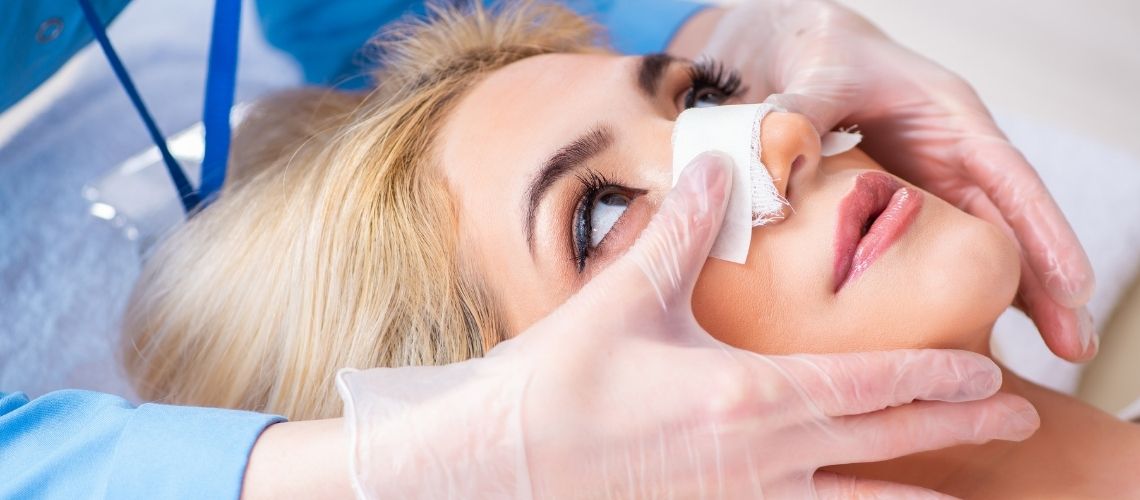
- The tape and plastic protector on the outside of the nose provide support during the healing process.
- A silicone nasal packing may be placed inside to keep the nasal passage open. These packings should not be removed.
- Removal of the external nasal protector and internal nasal packing is painless, and the removal time will be communicated by the assistant.
Care should be taken to prevent water from entering the nose during the first week. During this period, only the seawater spray specified in the prescription should be used. Afterward, it is possible to take a short shower with lukewarm water, provided that water does not touch the nose. Hot and steamy environments should be avoided. For revision patients in whom ear or rib cartilage has been used, the area from which the cartilage was taken should not come into contact with water for the first seven days. A shower can be taken afterward. These recommendations are of great importance for accelerating the recovery process and reducing the risk of complications. The recovery process after rhinoplasty will be more comfortable and successful with these steps.
Postoperative Nasal Congestion and Care Process
After rhinoplasty surgery, patients should follow some important care steps. Bloody discharge from the nose is considered normal during the first three days. The gauze placed in front of the nostrils absorbs this discharge and may need to be changed frequently. Swelling that increases until the third day begins to decrease after this period. Although excessive swelling and bruising are not expected due to the care taken during the operation, a cold application may be applied to the face in cases of significant swelling:
- During the first six weeks, congestion may occur due to crusting and discharge in the healing areas.
- Regular use of nasal sprays and moisturizing drops helps make this process more comfortable.
- As the healing process progresses, the congestion decreases and the nose regains its normal function.
- It is important to avoid forceful nasal cleaning during the first month after surgery.
These care steps help ensure a more comfortable and successful postoperative recovery process.
Points to Consider and the Recovery Process After Rhinoplasty
There are important points that patients should pay attention to after rhinoplasty surgery. During the first week after the operation, medications such as aspirin that may increase the risk of bleeding should be avoided. It is also recommended to avoid tobacco and alcohol consumption during the same period. If unexpected nasal bleeding, high fever, or abnormal pain occurs, the doctor should be informed immediately.
Recovery process:
- First week: Avoid aspirin and similar medications, and do not consume tobacco or alcohol.
- After two weeks: Begin brisk walking.
- For three months: Do not perform strenuous exercise, avoid trauma to the nose, and stay away from hot environments. Do not wear glasses; use contact lenses when necessary.
- For six months: Use sunscreen with SPF 30 or higher for sun protection.
Regular use of the prescribed medications during this period will accelerate the healing process. Following these recommended rules after surgery will facilitate recovery and help prevent possible complications. The recovery process after rhinoplasty may vary depending on how closely the patient follows these instructions.
Frequently Asked Questions
What is the ideal age range for rhinoplasty surgery, and how does age affect the results?
For rhinoplasty, it is generally recommended to wait until facial and bone development is complete; this corresponds to approximately 16-17 years of age for girls and 17-18 years for boys. Although there is no definite upper age limit, the person’s overall health condition and skin elasticity are more determining factors. At older ages, reduced skin elasticity and hardening of the cartilage structure may slightly affect the healing process and require the surgical techniques to be adapted accordingly. However, any adult with good overall health and realistic expectations may be a candidate for rhinoplasty after evaluation by a doctor.
How long does it take for the nose to fully settle and take its final shape after rhinoplasty surgery?
The nose taking its final shape after rhinoplasty is a process that requires patience. Although a significant portion of the swelling decreases within the first few weeks, it generally takes between 6 months and 1 year for the nose to fully settle and reach its final appearance. Especially in patients with thick skin, this period may extend to 1.5 or even 2 years. During this period, millimetric changes in the shape of the nose may continue. Therefore, it is important to wait at least one year before evaluating the final result of the surgery and to attend the follow-up appointments specified by the doctor regularly.
What is revision rhinoplasty, and how long after the first surgery can it be performed?
Revision rhinoplasty is a corrective surgery performed on people who have previously undergone one or more rhinoplasty operations but are not satisfied with the result from an aesthetic or functional perspective, such as breathing. This surgery is generally more complex and technically challenging than the first operation because the existing tissue structure may have changed and materials such as cartilage may have decreased. For revision rhinoplasty, it is generally recommended to wait at least 6 months, and ideally 1 year, after the first surgery for the tissues to heal completely and the final shape of the nose to become apparent.
How is the sense of smell affected after rhinoplasty surgery, and when does it recover?
A temporary decrease or change in the sense of smell after rhinoplasty surgery is quite common due to swelling and crusting in the nasal mucosa. Patients may generally have difficulty smelling during the first few weeks. This condition is usually temporary and gradually improves as the inside of the nose heals, the swelling decreases, and the airway opens. The complete return of the normal sense of smell may generally take from several weeks to several months. In rare cases, temporary unusual odor perceptions related to dissolvable sutures may occur.
Is a special massage technique applied to accelerate healing after rhinoplasty, and if so, how and when should it be started?
Yes, some surgeons may recommend special massage techniques to help postoperative swelling resolve more quickly and to increase lymphatic drainage. However, whether this massage should be applied, when it should be started, and which technique should be used depend entirely on the surgeon’s decision. It is generally applied 1-2 weeks after surgery, as demonstrated by the doctor, with very gentle movements on the nasal bridge and sides. Since self-performed, uninformed, or forceful massage may damage the nasal structure, it should always be done with the doctor’s advice and guidance.

Prof. Dr. Murat Songu – Burun Estetiği (Rinoplasti) Uzmanı
Prof. Dr. Murat Songu, 1976 yılında İzmir’de doğmuş, tıp eğitimini Ege Üniversitesi Tıp Fakültesi’nde tamamladıktan sonra Celal Bayar Üniversitesi Kulak Burun Boğaz Anabilim Dalı’nda uzmanlık eğitimini tamamlamıştır. 2005–2006 yıllarında Fransa’nın Bordeaux kentinde Prof. Vincent Darrouzet ve Dr. Guy Lacher gibi rinoloji alanının önde gelen cerrahlarıyla çalışarak rinoplasti, fonksiyonel burun cerrahisi ve kafa tabanı cerrahisi üzerine ileri eğitim almıştır.
Burun estetiğinde doğal görünüm, nefes fonksiyonunun korunması ve yüz estetiği dengesini ön planda tutan Prof. Dr. Songu, açık teknik rinoplasti, piezo (ultrasonik) rinoplasti, revizyon rinoplasti, burun ucu estetiği ve fonksiyonel septorinoplasti operasyonlarında ulusal ve uluslararası düzeyde tanınan bir cerrahtır. Yurt içi ve yurt dışında çok sayıda rinoplasti kongresinde eğitici ve konuşmacı olarak yer almış; yüz estetiği ve burun cerrahisinde modern tekniklerin yaygınlaşmasına öncülük etmiştir.
100’den fazla bilimsel yayını, kitap bölümü yazarlıkları ve 1700’ü aşkın uluslararası atfıyla rinoplasti alanında Türkiye’nin en saygın akademisyenlerinden biri olan Prof. Dr. Murat Songu, doğal, yüzle uyumlu ve fonksiyonel sonuçlar hedefleyen cerrahi yaklaşımıyla hem bilimsel hem estetik başarıları bir araya getirmektedir.