Türkçe
Lip filler is a hyaluronic acid-based aesthetic injection procedure performed to increase lip volume, enhance contour definition, and correct lip asymmetries. It provides natural-looking results without requiring surgical intervention and lasts approximately 6-12 months.
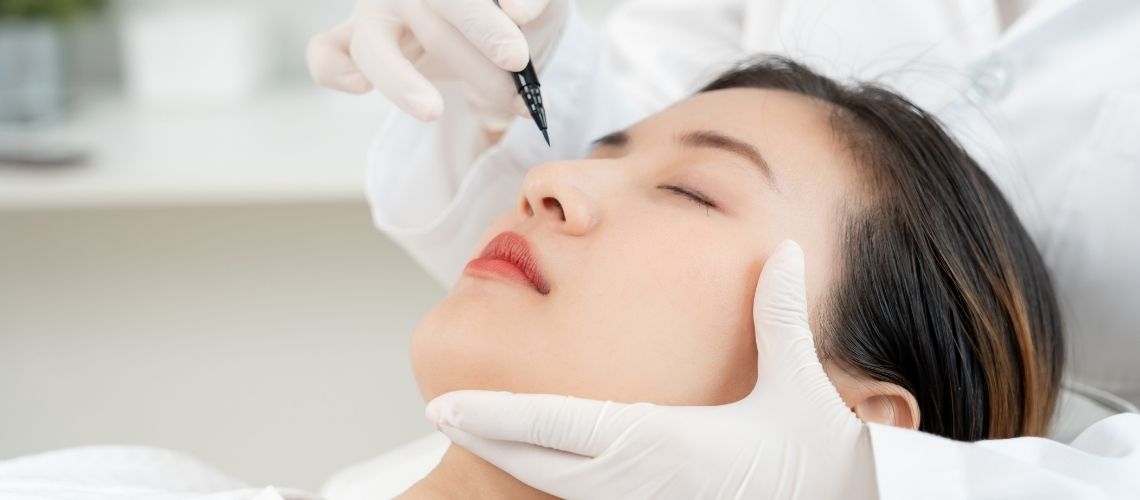
Before the lip filler procedure, a local anesthetic cream is applied to the injection area to reduce pain and discomfort. The filler is then injected in a way that suits the lip structure using fine-tipped needles or cannulas. The procedure generally takes 15-30 minutes.
In addition to adding volume, it can also be applied for aesthetic goals such as defining the lip contour and lifting the edges of the lips. It is also preferred for reducing lip thinning and lines that develop with age.
Mild swelling, redness, or bruising may occur after the procedure; these effects generally resolve within a few days. During the first 24 hours after lip filler, it is recommended to avoid hot foods, makeup, and physical contact. The procedure may be repeated at regular intervals to maintain the effect.
| What You Need to Know | Information |
| Definition | Lip filler is an aesthetic procedure performed to increase lip volume, shape the lips, provide symmetry, or define the lip contour. Hyaluronic acid-based fillers are generally used. |
| Purpose | It is applied to plump thin lips, define the lip borders, correct asymmetries, and restore volume lost with aging. |
| Application Process | A local anesthetic cream or injection is applied before the procedure. The filler is then injected into the lips and their borders using a fine-tipped needle or cannula. The procedure takes an average of 15-30 minutes. |
| Materials Used | Hyaluronic acid-based fillers are most commonly preferred. These substances are compatible with the body and temporary. |
| Duration of Effect | It generally lasts 10 months. This may vary depending on personal factors and the type of product used. |
| Advantages | Its advantages include providing rapid results, not requiring surgical intervention, being reversible, and offering results close to a natural appearance. |
| Disadvantages | Temporary results, swelling, bruising, pain at the injection site, and rarely lump formation or infection may occur. An unnatural appearance may develop when excessive amounts are applied. |
| Suitable Candidates | People with thin lips, individuals whose lip volume has decreased with age, and those who want to define their lip contour. |
| Recovery Process | Mild swelling and bruising may occur after the procedure; these generally resolve within a few days. The person can usually return to daily life on the same day. |
| Points to Consider | Pressure should not be applied to the lips during the first 24 hours after the procedure, and hot drinks and strenuous exercise should be avoided. The procedure should be performed by a qualified and experienced healthcare professional. |
What Does Lip Filler Contain and Is It Safe for the Body?
The first and most justified question patients ask when they sit in the chair is what substance will be injected into their bodies. Today, the gold standard accepted by modern medicine and aesthetic surgery is Hyaluronic Acid (HA)-based fillers. This substance should not be considered a synthetic chemical produced in a laboratory. In fact, hyaluronic acid is a building block that already exists in our skin, joints, eye fluid, and connective tissues and is very familiar to our body.
The greatest biological miracle of this molecule is its water-retention capacity. It can attract water molecules approximately one thousand times its own weight. Therefore, when we inject hyaluronic acid into the lips, we do not merely provide physical fullness; we also apply intensive moisture therapy to the area. Dull, dry, and cracked lip tissue regains shine and a vibrant color thanks to this substance.
The fillers we use in clinical practice are technologically processed forms of the pure hyaluronic acid found in the body. If we administered it in its pure form, the body would metabolize and eliminate it within 24 hours. However, thanks to “cross-linking” technology, this substance is transformed into a gel consistency and its longevity is increased. Regarding safety, working with FDA-approved brands that have been applied millions of times worldwide for many years is the foundation of safety. The greatest advantage of these fillers is that they are “reversible.” In other words, if the result is unsatisfactory or a medical necessity arises, an enzyme is available that completely dissolves the filler. It does not remain in the body forever like permanent silicone fillers and is naturally eliminated by the body over time.
The basic characteristics that the filler material used should have are as follows:
- Biocompatible structure
- High water-retention capacity
- Homogeneous gel consistency
- Ability to integrate
- Reversibility
Why Should Lip Filler Be Performed by an ENT Specialist?
From the outside, lip filler may appear to be a simple injection procedure. However, beneath the tissue where the needle enters lie some of the most complex and vital anatomical structures of the face. The lips are the most mobile organ of our face; we speak, eat, smile, and kiss. Beneath such a functional organ are very strong arteries that supply it, known as the labial arteries. The depth at which these vessels run, the curves they make, and their connections with other vessels differ in every individual.
An Ear, Nose, and Throat and Head and Neck Surgery specialist focuses throughout their medical training specifically on the anatomy, surgery, and vascular structures of this region. The physician performing the filler application must know by heart which muscle the tip of the needle is in, how close it is to a blood vessel, and where the nerve bundle runs the moment the needle enters the skin. For us, patient safety is just as important as the aesthetic appearance, if not more important.
Mastery of vascular anatomy is essential to minimize potential risks. Random injections performed in the wrong plane, at the wrong depth, or into the muscle may cause aesthetically undesirable lumps and also create a risk of circulatory impairment. In addition, a surgeon’s perspective does not evaluate the lips alone. It considers the angle between the nose and lips, the position of the chin, and the condition of the cheekbones as a whole. This holistic approach and surgical discipline guarantee that the procedure is not only beautiful but also healthy.
How Is Planning Performed Before Lip Filler Application?
Every patient’s face is as unique as a fingerprint. Therefore, the approach of saying “I want my friend’s lips” or “I want lips like that celebrity” is unfortunately neither realistic nor correct. Those lips may look beautiful on that face, but they may not suit your facial features, bone structure, or expressions. The foundation of a successful procedure is established with a detailed facial analysis long before sitting in the chair and picking up the needle.
At this stage, we consider the universal aesthetic criteria known as the “Golden Ratio.” In an ideal face, there should be a certain volume balance between the upper and lower lips. It is generally considered more aesthetic and attractive for the lower lip to be slightly fuller than the upper lip. However, if the patient’s chin is recessed, projecting the lips too far forward will make the chin appear even less defined. Or if the distance between the nose and lips, the moustache area, is too long, it is necessary not merely to inflate the lips but to curl them upward and shorten this distance.
The criteria we consider during planning are as follows:
- Existing lip volume
- Distance between the lips and nose
- Visibility of the teeth
- Position of the chin tip
- Asymmetries
- Skin quality
We particularly adopt a “gradual approach” in patients whose lips are structurally very thin. Attempting to transform an extremely thin lip into a very large volume in a single session damages the tissue and appears artificial. For these patients, the healthiest approach is to spread the process over several months and gradually expand the tissue.
How Is Pain Managed During Lip Filler Application?
Our lips are among the most sensitive areas of the body and contain a very high concentration of nerve endings. Therefore, patients’ greatest concern regarding the procedure is generally the pain they may feel. However, thanks to advanced medical techniques and new-generation products, this procedure has now become extremely comfortable.
We provide pain management in three stages. First, approximately 15-20 minutes before the procedure, we apply very strong local anesthetic creams to the lip area. These creams numb the skin and greatly reduce the sensation of needle insertion. The second and very important detail is that the high-quality fillers we use contain an anesthetic substance called “lidocaine.” In other words, as soon as the filler enters the tissue, it also causes numbness from within, eliminating the sensation of pressure or burning during the procedure.
The third method is “nerve block,” which is one of the strongest tools we have as surgeons. Especially in patients with a very low pain threshold or who are very afraid of the procedure, we can temporarily block the main nerves supplying the lips with a small injection from inside the mouth, just as dentists do. In this case, the lips become completely numb, and the patient does not feel the slightest discomfort during the procedure.
Should a Needle or Cannula Be Preferred?
Technically, two different instruments can be used in lip filler application: traditional fine-tipped needles and blunt-tipped cannulas. Patients often wonder about the difference between these two. In fact, both methods have their own advantages, and for an ideal result, we often use them in combination.
Thanks to its sharp tip, the needle technique allows us to work with millimetric precision. The needle is indispensable especially for defining the curved frame, or contour, of the lips and clarifying the central curve called the “Cupid’s Bow.” In vertically performed techniques such as Russian Lips, a needle must necessarily be used. However, because the needle is sharp, it may slightly increase the likelihood of bruising after the procedure.
A cannula uses a different technology. Its tip is rounded rather than sharp. Therefore, as it advances beneath the skin, it does not cut blood vessels or nerves but pushes them aside and passes around them. This feature places the cannula one step ahead in terms of safety. When a cannula is used, the risk of bruising and swelling is much lower. It is generally possible to reach the entire lip and add volume through a single tiny entry point opened at the corner of the mouth.
The advantages of the instruments used are as follows:
- Sharp lines with a needle
- Detailed shaping with a needle
- Safety with a cannula
- Less bruising with a cannula
- Homogeneous volume with a cannula
The physician decides which method to use according to the patient’s lip structure and the desired result. Sometimes providing volume with a cannula and refining the details with a needle produces the most perfect result.
What Are Russian Lips and Other Popular Lip Filler Shapes?
In recent years, various names and trends have emerged in lip filler with the influence of social media. The leading one among these is “Russian Lips.”
- Russian Lips (Russian Technique): The aim of this technique is not to extend the lips forward, in the profile direction, but to increase their height by opening them upward, in the vertical direction. The flat and wide appearance of the lips, as though they have a heart shape, is the signature of this technique. A special vertical injection method called “tenting” is used. It provides excellent results especially in patients with a long distance between the lips and nose because it visually shortens this distance by lifting the lips upward. However, it may look exaggerated in people whose lips are already very short or full.
- Natural Technique: The aim of this approach is for it to be impossible to tell that the person has had filler. The existing lip structure is preserved, only a slight amount of volume is added, and the borders are defined. Soft-consistency fillers that integrate most effectively with the tissue are preferred.
- Pearlique Technique: This style focuses especially on the lower lip. Two distinct “cushions,” resembling pearls, are created in the exact center of the lower lip, one on the right and one on the left. This makes the lower lip appear fuller, slightly divided in the center, and attractive.
The choice of technique is entirely a matter of examination. Determining the technique most suitable for your facial features, bone structure, and overall expression depends on the physician’s aesthetic vision. The essential principle is to perform what suits you rather than what is fashionable.
What Happens During the Recovery Process After Lip Filler?
The lip filler procedure takes an average of 15-20 minutes and is known as a “lunchtime procedure.” In other words, you can return to your social life immediately after the procedure. However, this does not mean that the procedure has no side effects. Since the tissue has been treated, it is entirely natural for the body to respond.
The lips you see when you look in the mirror immediately after the procedure are not the final result. The appearance at that moment combines the filler’s own volume, edema, or swelling, caused by trauma during the procedure, and the effects of anesthesia. Your lips may appear much larger than usual and perhaps even slightly asymmetrical. Our patients may sometimes become concerned when they see their lips very swollen on the evening of the first day or when they wake up the following morning. This is an expected and temporary process.
The first 2-3 days are when the swelling reaches its peak. There may be slight firmness in the lips and tiny bruises at the needle entry points. The swelling may resolve asymmetrically, meaning the right side of your lips may appear more swollen than the left. At this stage, it is necessary not to panic or constantly examine the lips. It takes an average of 10 to 15 days for the true result to appear as the filler retains water, integrates with the tissue, and softens. During this period, it is necessary to be patient and follow the physician’s recommendations. Once healing is complete, the exaggerated swelling will disappear and be replaced by natural and soft fullness.
What Should Be Considered After Lip Filler?
If 50% of the success of the application depends on the physician’s technique, the other 50% depends on the patient’s aftercare. During the first few days, the filler is still settling within the tissue and is susceptible to changing shape. Therefore, following certain rules is vitally important.
The following should be avoided:
- Extremely hot drinks
- Turkish baths
- Saunas
- Solariums
- Intense exercise
- Lip makeup
- Alcohol consumption
- Firm massage
It is particularly necessary to avoid consuming very hot tea, coffee, or soup during the first 24 hours. Heat dilates blood vessels and increases swelling. For the same reason, hot environments such as Turkish baths and saunas are also prohibited during the first week. To eliminate the risk of infection, lipstick, lip gloss, or foundation should not be applied to the lips on the first day. The area should be kept clean until the needle punctures close.
We ask our patients who exercise to take a break from strenuous workouts on the day of the procedure and the following day. Activities that increase blood pressure and heart rate may increase facial swelling. In addition, unless your physician specifically recommends it, you should not rub your lips or massage them firmly. Avoiding actions that place physical pressure on the lips, such as kissing, during the first 24 hours is also important to prevent the filler from shifting, or migrating.
What Is Vascular Occlusion and How Is Risk Managed?
Transparency is very important in medical procedures. Although lip filler is a safe procedure, it carries risks like every medical intervention. The most common risks are simple bruising and swelling. However, although very rare, there is a risk of a more serious complication called “Vascular Occlusion.” This occurs when the filler is accidentally injected into a blood vessel or placed immediately beside it and compresses the vessel externally.
In this situation, blood flow to the tissue is impaired. Symptoms such as color changes in the area, whitening or bruising, and severe pain may occur. This is precisely where the importance of having the procedure performed by an ENT and Facial Aesthetic Surgeon becomes apparent. An expert with knowledge of anatomy and complication management can recognize this condition immediately.
The agents used during the intervention process are as follows:
- Hyaluronidase enzyme
- Warm compress
- Blood thinners
- Vasodilator medications
- Steroid therapy
The specialist physician uses the dissolving enzyme called “Hyaluronidase” to dissolve the filler immediately and reopen the vessel. With early intervention, this condition can be completely corrected without leaving permanent damage. The greatest danger of procedures performed in unlicensed establishments or by non-physicians is that this complication may not be recognized or treated. For your safety, you should always choose clinics and physicians equipped to manage complications.
How Long Does Lip Filler Last?
The longevity of hyaluronic acid fillers is not permanent, and this is actually the healthy situation. The duration of the filler varies considerably from person to person. On average, we expect it to last between 6 and 12 months. However, this duration depends on the technology and density of the filler used and, most importantly, the patient’s metabolic rate.
In people with very fast metabolisms, those who exercise regularly, or those with overactive thyroid hormones, the filler may dissolve slightly more quickly. In addition, because the lips are the most mobile and highly vascularized area of the face, they metabolize filler more quickly than immobile areas such as the cheekbones. Smoking is also one of the factors that shortens the lifespan of the filler.
This is where the concept called the “Cumulative Effect” comes into play. In someone receiving filler for the first time, dissolution may occur more quickly. However, small touch-ups performed at regular intervals before the filler has completely disappeared extend its duration. With each application, a small amount of filler remains in the deeper tissue and new filler is added over it. Thus, over time, a small refreshing procedure performed once a year becomes sufficient to preserve the shape.
Why Do Lip Filler Migration and the Duck Lip Appearance Occur?
The “duck lip” appearance that we see in public and find aesthetically disturbing, or the migration of filler into the moustache area, is definitely not a normal result; it is an application error. This situation generally results from two causes: incorrect technique or incorrect product selection.
Lip tissue has a certain volume capacity. If a very large amount of filler exceeding this capacity is injected in a single session, the tissue cannot contain the volume. Under pressure, the filler seeks space and generally moves beyond the lip border toward the moustache area. This creates the unwanted projecting appearance when viewed from the side.
Another cause is injecting the filler into the wrong layer. Injections made into the lip muscle or too superficially may lead to this problem. Procedures extending beyond the white line known as the “White Roll,” which gives the lips their beautiful curve, also appear artificial. If such filler migration is present, adding new filler on top is a mistake. The most appropriate procedure is first to dissolve the existing misplaced filler, reset the lips, and rebuild them with the correct technique after the tissue has healed.
Which Problems Does Lip Filler Solve Besides Volume?
Although the first thing that comes to mind when lip filler is mentioned is “enlargement,” we actually use this procedure to solve many different aesthetic and anatomical problems. There are even cases in which we perform only repair without adding any volume.
Its areas of use are as follows:
- Correction of asymmetry
- Moisturizing
- Anti-aging treatment
- Gummy Smile treatment
- Reduction of barcode lines
- Lifting the corners of the mouth
Many people have right-left asymmetries that are congenital or develop later due to tooth extraction, trauma, and similar causes. We achieve balance by equalizing these millimetric differences with filler. In addition, for people whose lips are constantly dry and cracked, we perform “lip rejuvenation” using special fillers that do not add volume but provide intense moisture. Filler is also highly effective in treating the “barcode” lines, or smoker’s lines, that develop above the lips with age. In patients whose gums are highly visible when smiling, known as a Gummy Smile, we sometimes combine the treatment with Botox to help the lips cover the gums more effectively. Therefore, lip filler is not merely an enlargement procedure but a comprehensive smile-design and rejuvenation tool.
Frequently Asked Questions
Does lip filler provide a natural appearance?
When performed with the correct technique and an appropriate amount of filler, lip filler can provide a natural and balanced appearance. Avoiding excessive application is critical for natural results.
How long does swelling last after lip filler?
Swelling after the procedure is generally noticeable during the first 24-48 hours. In most people, the swelling decreases within 3 to 5 days, and the lips begin to take their final shape.
How often should lip filler be renewed?
Lip filler maintains its effect for an average of 6 to 12 months. The duration of the filler may vary depending on the substance used, the application technique, and the person’s metabolism.
Is it safe to smoke after lip filler?
Smoking is not recommended during the first 24 hours. Smoking may cause irritation, infection, and uneven distribution of the filler in the lips.
Can lip filler be dissolved?
Yes, hyaluronic acid-based lip fillers are absorbed by the body over time. In the event of undesirable results, the filler can be dissolved quickly with a special enzyme called hyaluronidase.
Can lip filler be performed during pregnancy?
Lip filler is generally not recommended during pregnancy or breastfeeding. Hormonal changes and injection-related risks should be considered during this period.
Why does lump formation occur after lip filler?
Lump formation generally occurs as a result of incorrect technique, the application of an excessive amount of filler, or excessive movement of the lip muscles. It can often be corrected with massage or a corrective intervention.
Does lip filler hurt?
Thanks to the local anesthetic creams applied before the procedure, pain is minimal. Since some fillers contain an anesthetic substance, comfort is also provided during the procedure.
Can asymmetry develop after lip filler?
When performed with the appropriate technique, the risk of asymmetry is low. However, because of natural differences in lip structure, minor correction sessions may sometimes be necessary.
Can lip filler cause an allergy?
Hyaluronic acid-based fillers are generally non-allergenic. However, personal sensitivity reactions may rarely occur. Although the risk of allergy is very low, a physician should be consulted beforehand.

Prof. Dr. Murat Songu – Rhinoplasty (Nose Aesthetics) Specialist
Prof. Dr. Murat Songu was born in 1976 in Izmir and completed his medical education at the Ege University Faculty of Medicine. He then completed his residency training in the Department of Otorhinolaryngology at Celal Bayar University. Between 2005 and 2006, he received advanced training in rhinoplasty, functional nasal surgery, and skull base surgery in Bordeaux, France, working with leading rhinologists such as Prof. Vincent Darrouzet and Dr. Guy Lacher.
Prioritizing natural appearance, the preservation of breathing function, and facial aesthetic harmony, Prof. Dr. Songu is nationally and internationally recognized for his expertise in open rhinoplasty, piezo (ultrasonic) rhinoplasty, revision rhinoplasty, tipplasty, and functional septorhinoplasty. He has participated as an instructor and speaker at numerous rhinoplasty congresses worldwide.
With over 100 scientific publications, book chapters, and more than 1700 citations, Prof. Dr. Murat Songu is one of Türkiye’s most respected academics in the field of rhinoplasty, combining natural, facially harmonious, and functional results with scientific and aesthetic excellence.